
Manufacturing Execution Systems (MES) are the central backbone of production, serving as the single source of truth for material and process tracking. However, traditional MES landscapes are complex and highly dependent on continuous availability. Local Area Production Systems (LAPS) introduce a decentralized layer to enhance flexibility, resilience, and security without sacrificing the benefits of a central MES.
Key challenges in traditional MES environments
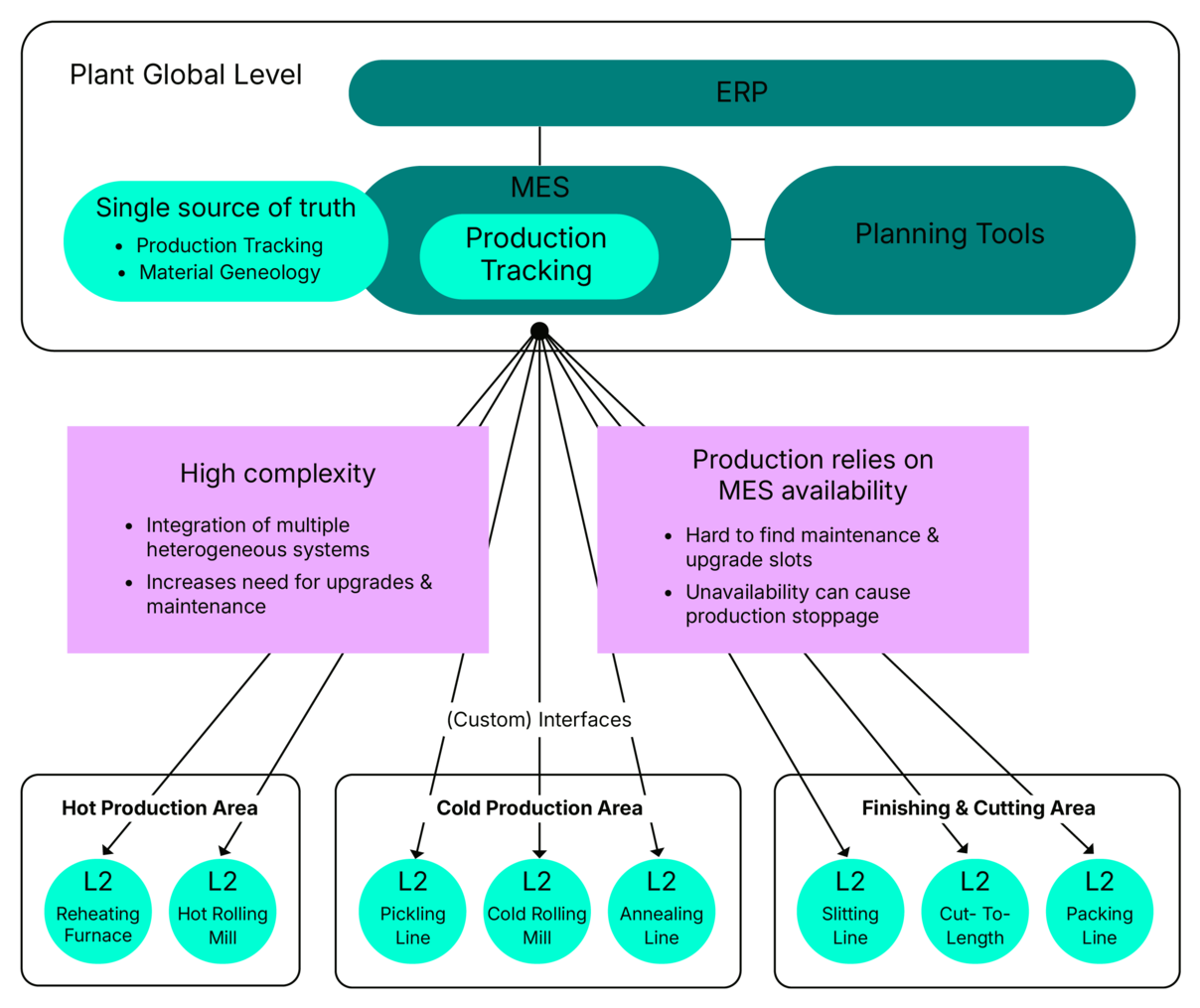
Despite the advantages of a centralized MES as a single source of truth for production and material tracking, this approach introduces several operational risks and technical hurdles. These challenges stem from system complexity, strong dependencies on MES availability, and difficulties in adapting to modernization and cloud strategies.
- Integrating many heterogeneous systems increases the need for frequent upgrades and maintenance, creating high complexity.
- MES downtime can lead to production stoppages, with limited opportunities to schedule updates.
- Replacing an obsolete MES in a "big bang" approach carries high risks of modernization.
- Connecting time-critical automation systems to a SaaS MES is challenging due to latency and connection dependency.
The LAPS data model and integration
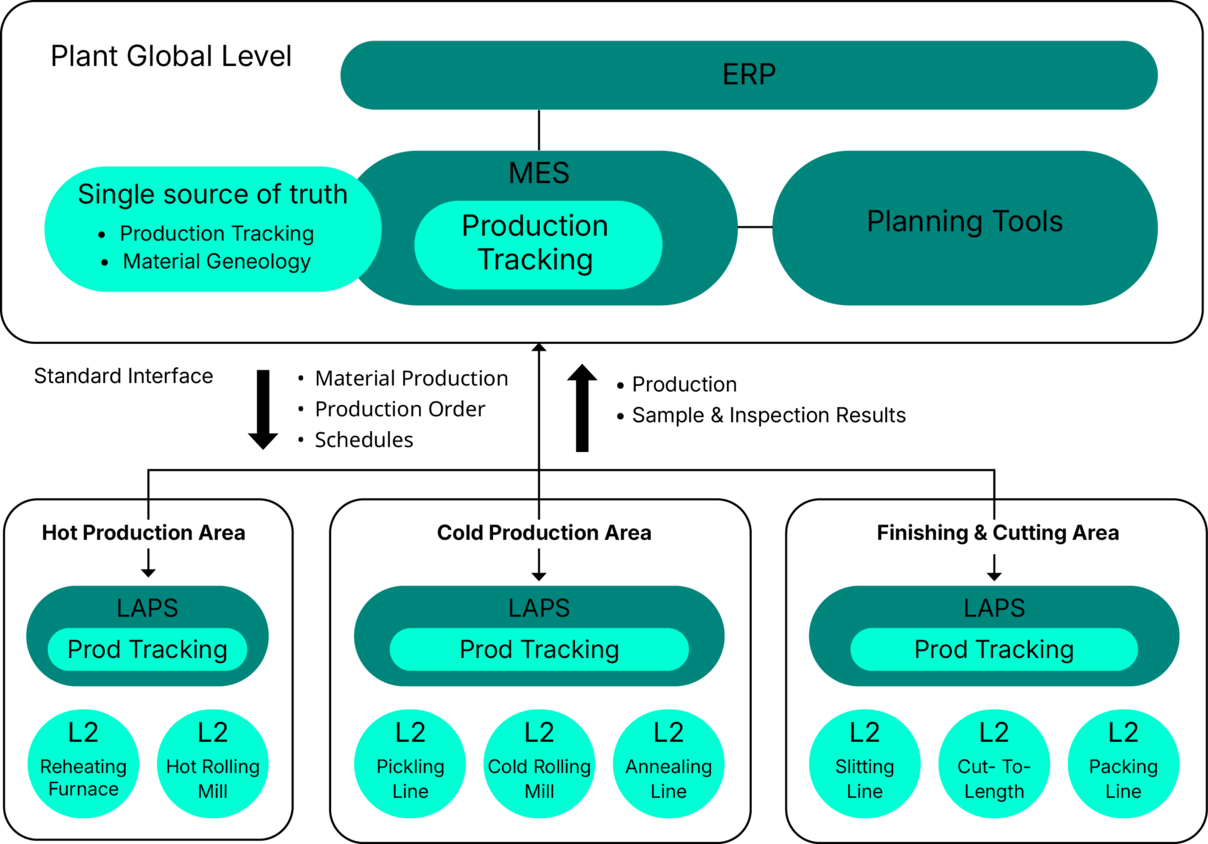
For Local Area Production Systems (LAPS) to deliver their full benefits, certain structural and organizational conditions must be in place. These ensure seamless interaction between the central MES and decentralized production areas, while preserving the MES as the overarching system of record.
Usage scenarios for LAPS: Achieving real-time production visibility
Local Area Production Systems can be applied in a variety of contexts across manufacturing environments. They provide practical solutions to both operational and strategic challenges, ensuring resilient day-to-day operations while enabling long-term modernization.
- LAPS is resilient as it allows production to continue during MES outages by using local backlogs of schedules and materials.
- Central MES updates can be performed flexibly without halting production; LAPS updates align with local maintenance windows.
- Ensures modernization pathway through gradual MES renewal by introducing LAPS one area at a time, reducing the risk of system replacement.
- On-premise LAPS act as buffers for connecting local automation with SaaS MES.
Benefits of optimized decentralized operations
By combining the strengths of centralized MES oversight with decentralized operational flexibility, LAPS deliver significant advantages that strengthen production reliability and simplify system complexity.
- Ensures production continuity even if the central MES is offline.
- Empowers operators to react flexibly to unplanned events, improving manufacturing process optimization.
- Reduces MES complexity by consolidating automation interfaces via the LAPS data model.
- Provides a safe path for MES modernization and cloud adoption.
Conclusion
With LAPS, PSI delivers a future-ready approach to MES landscapes that enhance flexibility, secure production, and that enable smooth modernization while maintaining MES as the trusted single source of truth.
Products used
PSImetals
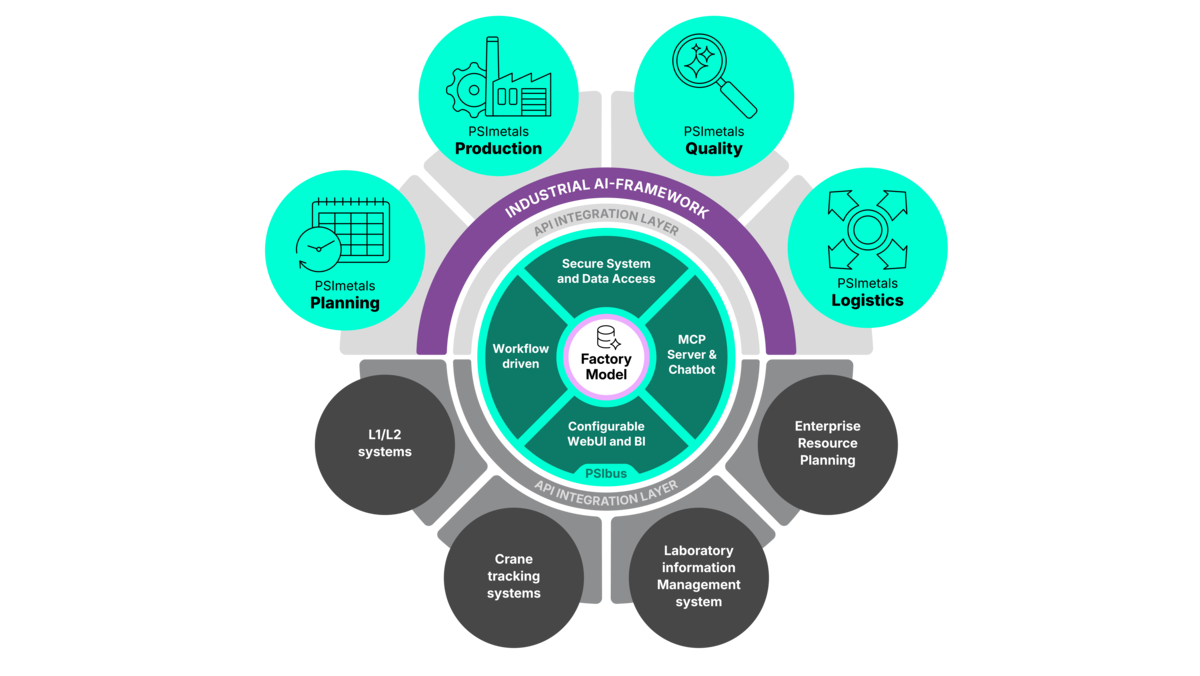
As a manufacturer of steel or non-ferrous products, you ensure your competitive edge by delivering the products to your customers in the agreed quantities and qualities as well as on schedule. PSImetals is the software product based on which we deliver production management solutions for the metals industry and support you in meeting the demands of your customers.
-
Process flow optimization
PSImetals optimizes and balances process flows and resource usage.
-
Efficient KPIs
PSImetals uses efficiency KPIs as optimization targets.
-
Reduced cost
PSImetals enhances cost effectiveness which increasingly implies sustainability.