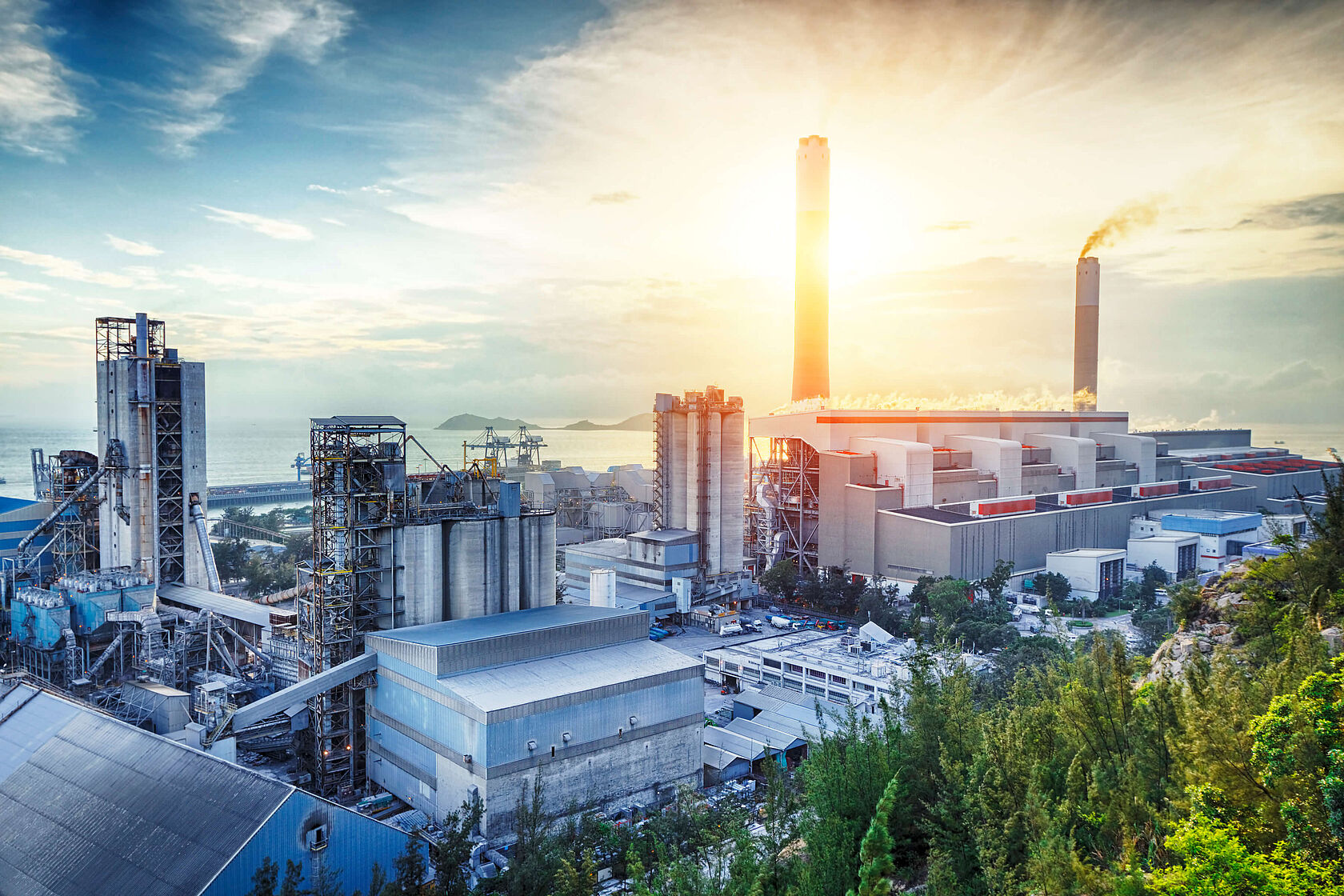
Energy networks in industry Optimal management of energy networks in industry
Modern industrial companies face the challenge of balancing high energy demands with cost-effective production and minimal environmental impact. Industrial customers can rely on PSI products to help them achieve this balance.
The optimal management of energy networks is a critical task for modern industrial companies. Intelligent network management systems support industrial customers in comprehensively monitoring and controlling their energy networks. This includes all voltage levels of electrical energy as well as pipeline networks for heating, cooling, process energy, gas, and water.
Challenges
Modern industrial companies face the challenge of balancing high energy demands with cost-effective production, all while taking sustainability goals into account.
Process energy
The operation of numerous energy and media flows—such as process heat, steam, cooling, compressed air, and mechanical drives—within complex interdependencies presents major challenges for industrial companies in managing thermal and mechanical process energy. Particularly in continuous processes, CHP plants, and waste heat utilization, there is often insufficient transparency regarding load conditions, efficiency levels, and temperature, pressure, and flow conditions. This lack of insight makes demand-oriented and efficient operation difficult.
The consequences include energy losses, inefficient partial load conditions, increased fuel consumption, and accelerated plant wear. Additionally, malfunctions or deviations are often detected too late, affecting the vulnerability of supply and process reliability.
These challenges are further intensified by the integration of new energy sources, such as hydrogen and hybrid supply concepts, which require consistent coordination and a database to ensure safe, efficient, and low-CO₂ operation.
Environmental protection and decarbonization
Industrial companies are increasingly prioritizing sustainability goals, such as environmental protection and decarbonization. In addition to maintaining a positive public image, they must also account for changing regulatory requirements.
Economic efficiency
Failures and downtime at industrial plants often lead to significant economic losses. Therefore, ensuring a reliable supply is essential.
Power grid monitoring and control of multiple locations
The merger of multiple companies into an industrial park, or the operation of several plants across different locations, requires transparency and stability in energy supply. Coordinating energy networks across these sites poses additional challenges for the technologies used.
Usage scenario
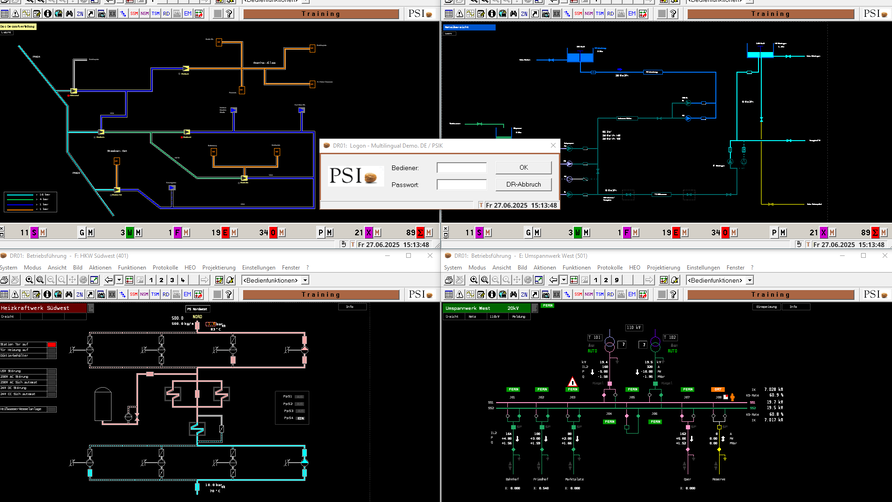
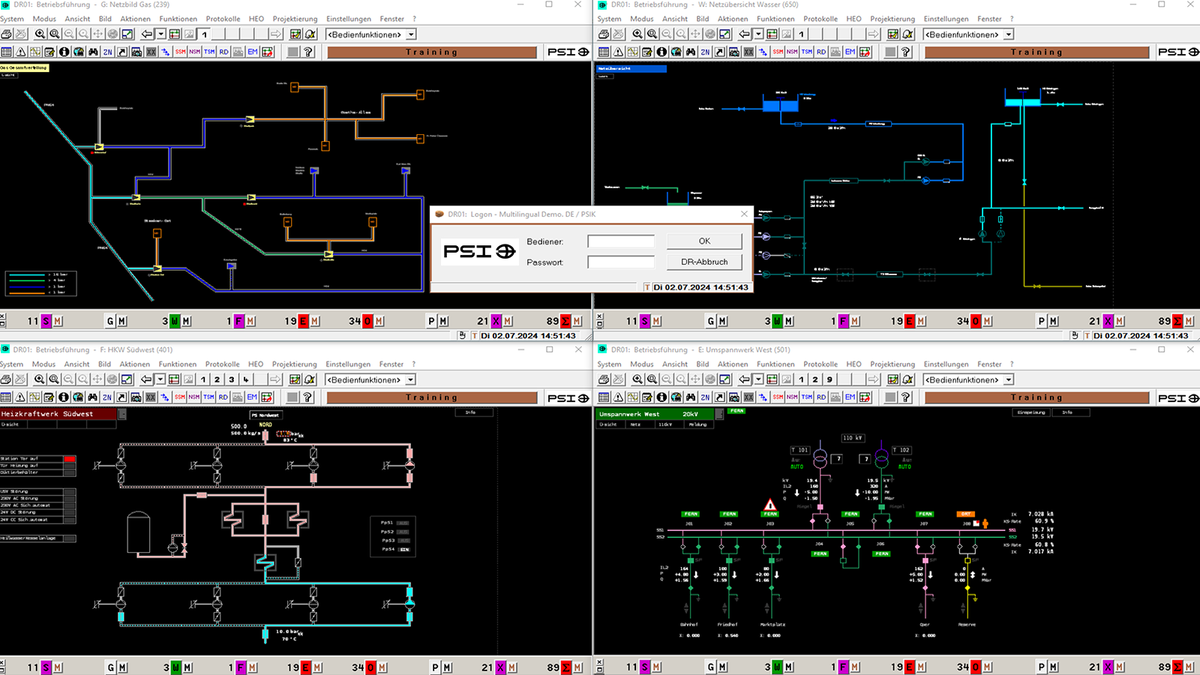
Network control systems, such as PSIcontrol or PSIprins, often combined with the field force management system PSIcommand and its mobile component PSIgridmobile, can be used across all industries with their own energy supply. Whether in the automotive, chemical, steel, aluminum, or manufacturing industries, PSI's software solutions serve not only energy supply companies but also individual production facilities, industrial parks housing multiple companies, and companies with multiple locations. They enable centralized grid monitoring and control within a single network control system and support all energy sectors—including all voltage levels of electrical energy and various pipeline media such as heat, cooling, process energy, gas, and water/wastewater—as well as cross-network integration. In addition, the PSIsmartcharging load, charging, and energy management system can be used to control the charging facilities of electrically powered vehicle fleets.
One network control system – multiple locations
The integration of multiple locations into a PSI network control system provides a comprehensive overview of the entire network across all sites. This enables comparability of network data and simplifies coordination between locations. Operating a centralized control room is more efficient than maintaining individual control rooms at each site. Additionally, the control room can be redundantly expanded to a secondary location or emergency control center, offering greater protection in case of failure. Multi-client capability also allows multiple companies to be managed within a shared network control system, with corresponding user roles and rights properly accounted for.
From the control center to the mobile device
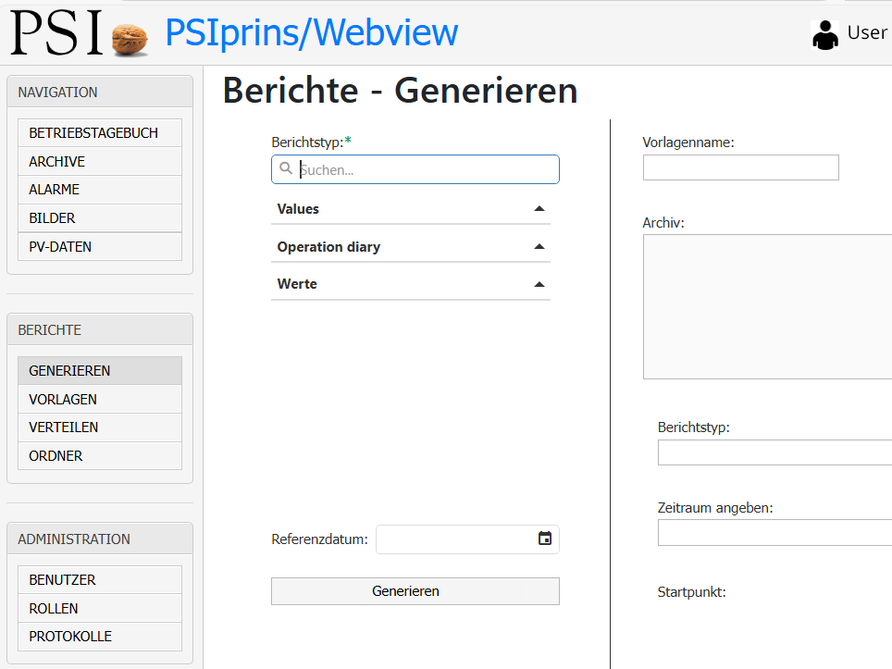
The use of machine learning and a high degree of automation enables seamless processes, from the operations manager in the control center to technicians on-site. The software solutions provide role- and rights-based access via web clients on laptops, tablets, or smartphones, ensuring smooth operations and the highest possible supply quality.
Maintenance and fault management
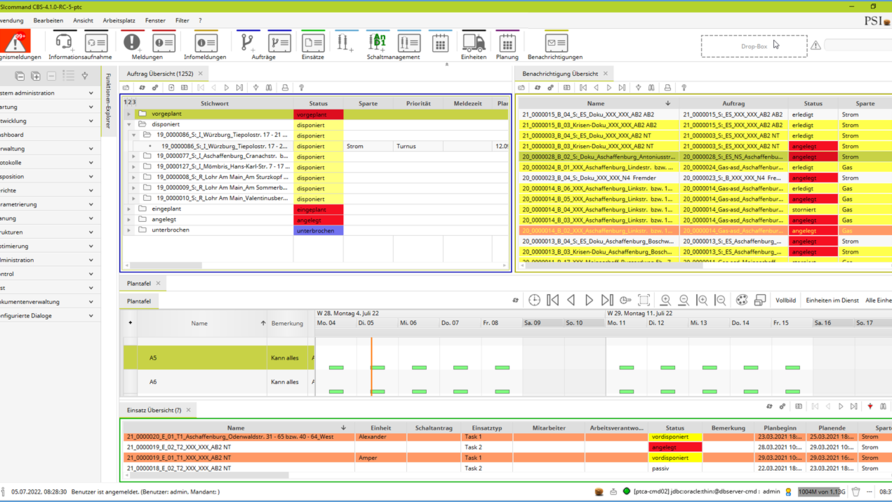
Faulty equipment is prevented company-wide through proactive maintenance strategies. By supporting the identification, resolution, and documentation of faults, repair times are minimized. These measures are further enhanced by multi-criteria optimization using artificial intelligence.
Support for environmental protection and decarbonization
The integration of a network control system can reduce energy consumption and, consequently, lower energy costs. The system also accommodates renewable energy sources, such as rooftop solar panels, and provides intelligent load and charging management for electric vehicle fleets. This enables companies to efficiently achieve their sustainability goals while complying with regulatory requirements.
Benefits
-
Increased supply quality
The software solutions ensure high supply quality by preventing outages, minimizing industrial plant downtime, and responding quickly to power fluctuations.
-
Cross-divisional transparency and energy supply stability
Centralized network monitoring and control across multiple locations and plants within a single system ensures transparency and stability in electrical networks at all voltage levels, in pipeline networks for various media, and through cross-network integration.
-
Increased efficiency and reliability through automation and AI
With the support of machine learning, advanced automation, and artificial intelligence, PSI's software solutions optimize task processing and related processes. This not only reduces employee workload but also increases reliability in industrial environments.
Conclusion
PSI's software solutions enable industrial companies to manage their high energy requirements efficiently, economically, and sustainably. By integrating various components, they provide cross-sector transparency and ensure a reliable and stable energy supply. Leveraging modern technologies such as machine learning and artificial intelligence, these solutions optimize energy network and production process management, minimize outages, and support environmental protection and decarbonization goals.
Products used
PSIprins
The network control system for municipal utilities, distribution grid and infrastructure operators and industrial companies
-
Combined energies grid management
PSIprins enables you to act rather than to react: it manages power and gas as well as district heating (in fact, all pipe-bound energies) across all sectors in a combined system.
-
Cost optimized operation
PSIprins and its modules & services are highly standardized. The entire range of services is flexible, support multi-tenancy and is future-proof.
-
Scalability
PSIprins' high scalability provides the tools required by grid operators to optimize networks independent of their size: from single commodity to complex segment-spanning operations.