Case Study PSImetals Product Carbon Footprint Tracking at Tata Steel Nederland
Decarbonizing steel production with transparent carbon footprint tracking.
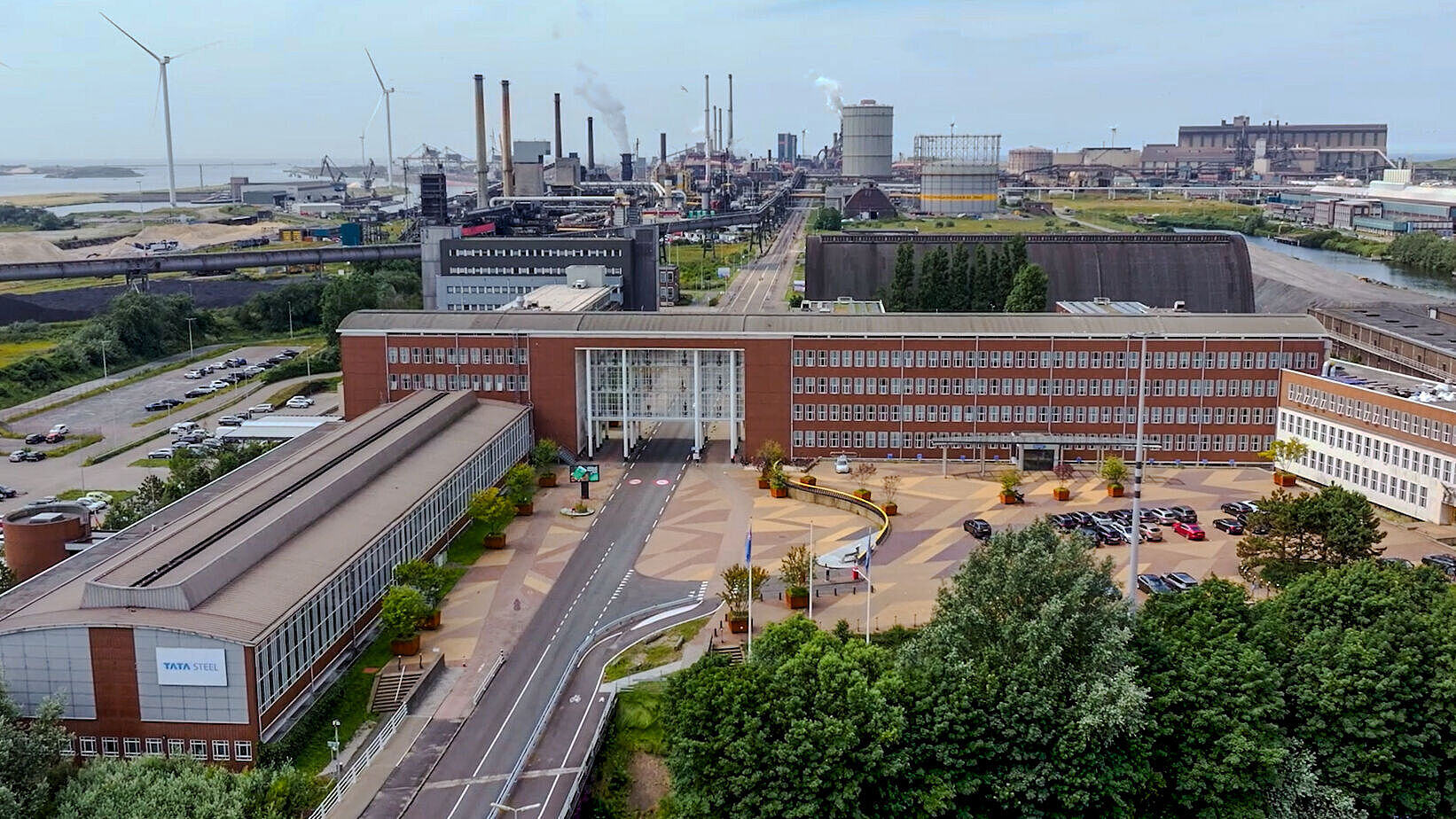
Tata Steel Nederland is one of Europe’s leading steel producers. It supplies high-quality steel products to the most demanding markets, including construction, automotive, packaging and engineering. Tata Steel Nederland is part of the Indian Tata Steel Group, one of the world’s largest steel companies.
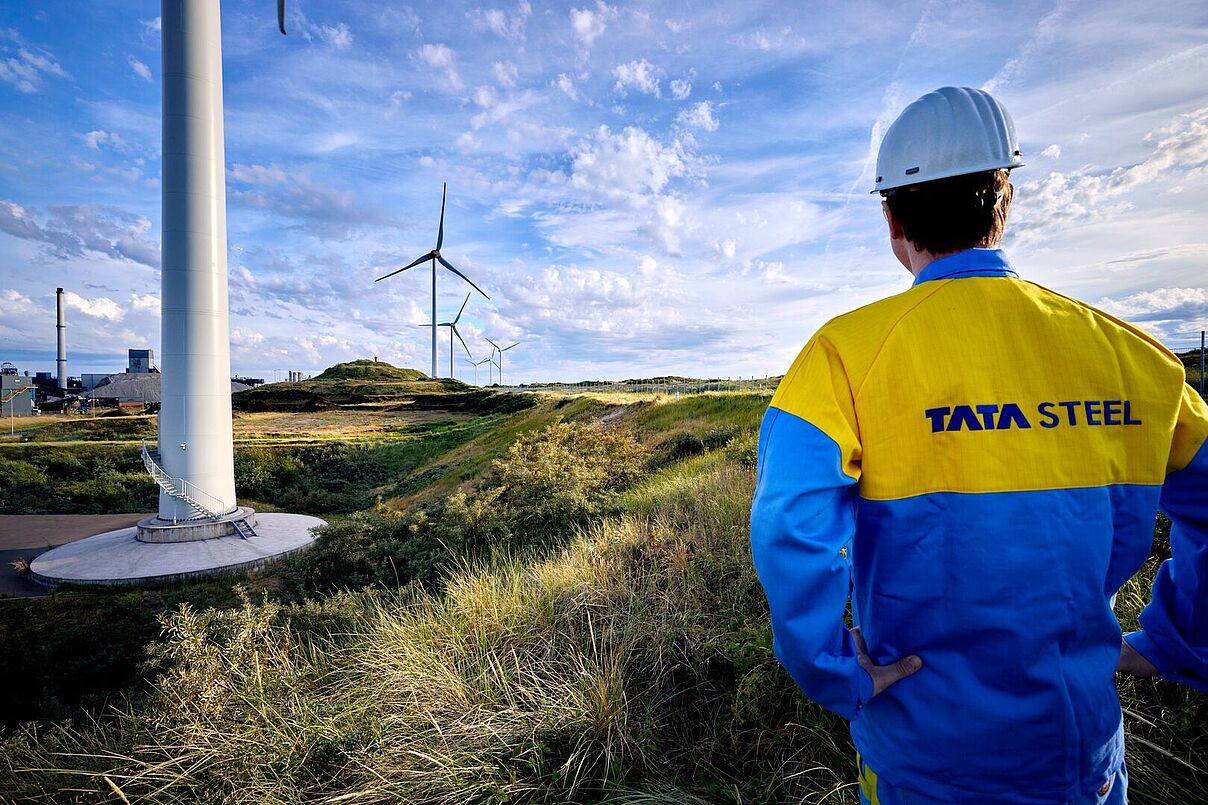
Tata Steel Nederland set ambitious targets within its Green Steel Plan to produce steel with zero carbon emissions by 2045.
Challenges Tata Steel faced
Tata Steel Nederland faced key challenges in meeting these green steel targets:
- Mass balance based emission reporting: Existing approaches provided only average, yearly-based figures, insufficient for customer transparency or operational decision-making.
- Complex production processes: The integrated plant in IJmuiden includes sinter, pellet, coke oven, blast furnace, steelmaking, hot and cold rolling, galvanizing, and finishing lines, each with distinct emission sources.
- Customer expectations: Automotive, construction, and packaging customers increasingly demanded product-level CO₂ certificates as part of their sustainability and procurement requirements.
- Regulatory pressure: Emerging standards such as the Low Emission Steel Standard (LESS) and EU carbon emission regulations required precise and auditable emissions data.
- Need for scalability: Any solution had to work with available average data initially but also evolve towards granular data on the level of production steps for individual materials as digitalization advanced.
The business case for metals producers
As part of the decarbonization strategy, reliable carbon footprint tracking, calculations and certificates for metals products are increasingly demanded by the market. Traditional approaches often rely on annual production averages and CO₂ equivalents per ton of steel, which lack precision and do not reflect the emissions of individual products.
At the same time, customers, regulators, and investors are placing increasing pressure on steelmakers and aluminum producers to deliver transparent and trustworthy CO₂ reporting on product level.
For Tata Steel Nederland and other metals producers, Product Carbon Footprint (PCF) tracking is not just a compliance tool; it’s a strategic business enabler as it offers them:
- Market access & differentiation: As sustainability becomes a key market factor, accurate product carbon footprint (PCF) tracking enables steel and aluminum producers to demonstrate that they are environmentally responsible and strengthen their competitive position.
- Pricing power: Verified low-emission products open opportunities for premium pricing and long-term supply contracts.
- Regulatory compliance: Transparent emissions accounting ensures compatibility with evolving carbon regulations and reporting frameworks.
- Operational efficiency: Granular tracking highlights high-emission processes, creating a roadmap for targeted efficiency and decarbonization investments.
- Customer and community trust: By offering transparent and reliable product specific certificates instead of plant production averages, producers build credibility and stronger customer and community relationships.
Solution approach
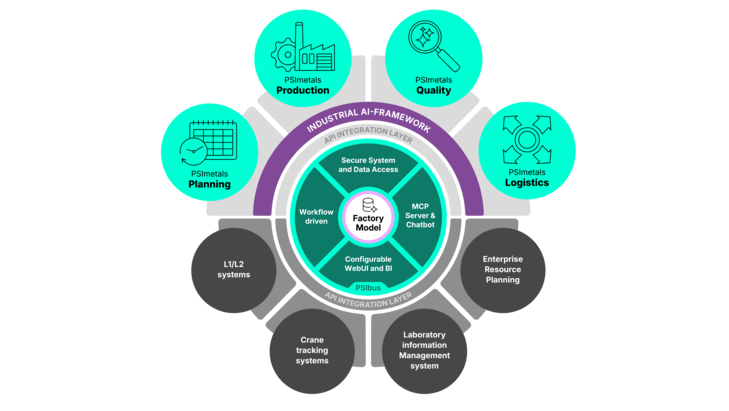
Tata Steel Nederlands implemented PSImetals Product Carbon Footprint (PCF) tracking within its Manufacturing Execution System (MES). Key capabilities:
- End-to-end CO₂ equivalent calculation: From raw materials through liquid steelmaking, casting, rolling, and finishing (cradle-to-gate).
- Configurable granularity: Supports emission factors and calculation rules at the level of production areas, lines, or single steps.
- Piece- and product-level tracking: Emissions are attached to the material genealogy, ensuring transparency across the full production chain.
- Support for LESS: Automatic classification of steel products according to the Low Emission Steel Standard (LESS).
- Basis for Product Carbon Footprint (PCF) certificates: Integration with Enterprise Resource Planning (ERP) level to create product certificates based on tracked emission data.
Implementation at Tata Steel Nederland
- Mass balance based Product Carbon Footprint (PCF) tracking (Phase 1)
- Average greenhouse gas (GHG) emission factors per kg of steel in different production areas were defined.
- Averaged emissions from iron and steelmaking area were used as initial Product Carbon Footprint (PCF) value of slabs after their creation in continuous casting machines.
- Further emissions for slabs and coils were calculated step by step, with gross and net values tracked across production.
- Dedicated consumptions based Product Carbon Footprint (PCF) tracking (Phase 2)
- Detailed scope 1, 2, and 3 emission factors for each material and energy input (e.g., hot metal, scrap, alloys, fuels, electricity) for Product Carbon Footprint (PCF) tracking along all production steps from liquid steelmaking up to cold rolling and finishing lines.
- Consideration of lump-sum emissions from idle and production preparation times by appropriate material factors at production line and area levels.
- Introduction of LESS classification for tracked products, enabling related “green steel” certificates.
Results
Phase 2 is currently in progress, and these results will be achieved after its implementation.
- Tata Steel Nederland can access reliable product-level carbon footprint values of all their production from cradle to gate, offering transparency and credibility to their customers.
- The implementation offers flexibility to start with an emission tracking based on average values per kg of produced steel in different production areas and evolve towards detailed tracking based on actual material and energy consumptions along all production steps.
- Tata Steel has operational insights regarding CO₂ equivalent emissions at different production processes which allows the identification of high-impact processes and will enable appropriate target decarbonization initiatives.
- The implementation offers Tata Steel Nederland market advantage as it supports its positioning as a leader in sustainable steel production and its participation in Green Lead Markets.
- Scalable system aligns with Tata’s future transformation to hydrogen-based iron and steelmaking.

Conclusion
With PSImetals Product Carbon Footprint (PCF) tracking, Tata Steel Nederlands has established a transparent and scalable framework for CO₂ equivalent tracking across its integrated steel plant. The solution not only provides the trustworthy sustainability data demanded by customers but also creates a foundation for continuous improvement and strategic decarbonization. In an industry under intense pressure to decarbonize, PSImetals enables metals producers to move from emission reporting based on average plant production values to precise, product-level emission accounting, turning sustainability into a competitive advantage.