
The operational and technical effort in cube storage projects often concentrates at the system interfaces. Slight coordination misalignments can lead to repetitive workshops and shifting decisions. Ultimately, success depends on how smoothly three distinct perspectives cooperate: logistics requires stable processes, IT requires long-term interface stability, and automation requires real-time control signals. If system ownership remains ambiguous, project discussions shift from operational processes to technical system boundaries, artificially inflating the project's scale. This complexity can be proactively prevented by defining clear roles, selecting a suitable architecture, and addressing exceptional operational cases early in the planning phase.
Download the report for free now
For further details, read the "Cube Storage" report published by even Logistics: www.even-logistics.com/de/reports/even-report-6-das-musst-du-uber-cube-storage-wissen
In standard project execution, three software classes interact: the Warehouse Management System (WMS) maps inventories and orders; the Warehouse Execution System (WES) coordinates tasks and resources during daily operations; and the Warehouse Control System (WCS) translates execution decisions into physical equipment movements in real time. However, these system designations are not standardized across the market; what one provider categorizes as a WES might be sold by another as a modular component of a WMS. To prevent misunderstandings and operational overlaps, functional responsibilities must be explicitly defined during the project planning phase.
System ownership and authority: WMS, WES, and WCS
Executing a successful integration requires a single, leading system of record for inventory and order statuses across all warehouse zones. In practice, this role is typically assigned to the WMS, whereas the WES and WCS focus on process execution and physical plant control.
Once system ownership is established, project teams must select an integration architecture that ensures operational stability and flexibility. Two primary approaches are common:
- Direct WMS Connection: The WMS communicates directly with the WCS or automation layer without an intermediary software layer. This minimizes data handover points and is highly effective when the scope of automation is straightforward and localized.
- Middleware or WES Integration: Interposing a WES or dedicated middleware between the WMS and WCS is beneficial when coordinating multiple automated subsystems or managing frequently shifting operational priorities. While this variant smooths out peak loads, it also increases the number of interfaces and the required testing effort.
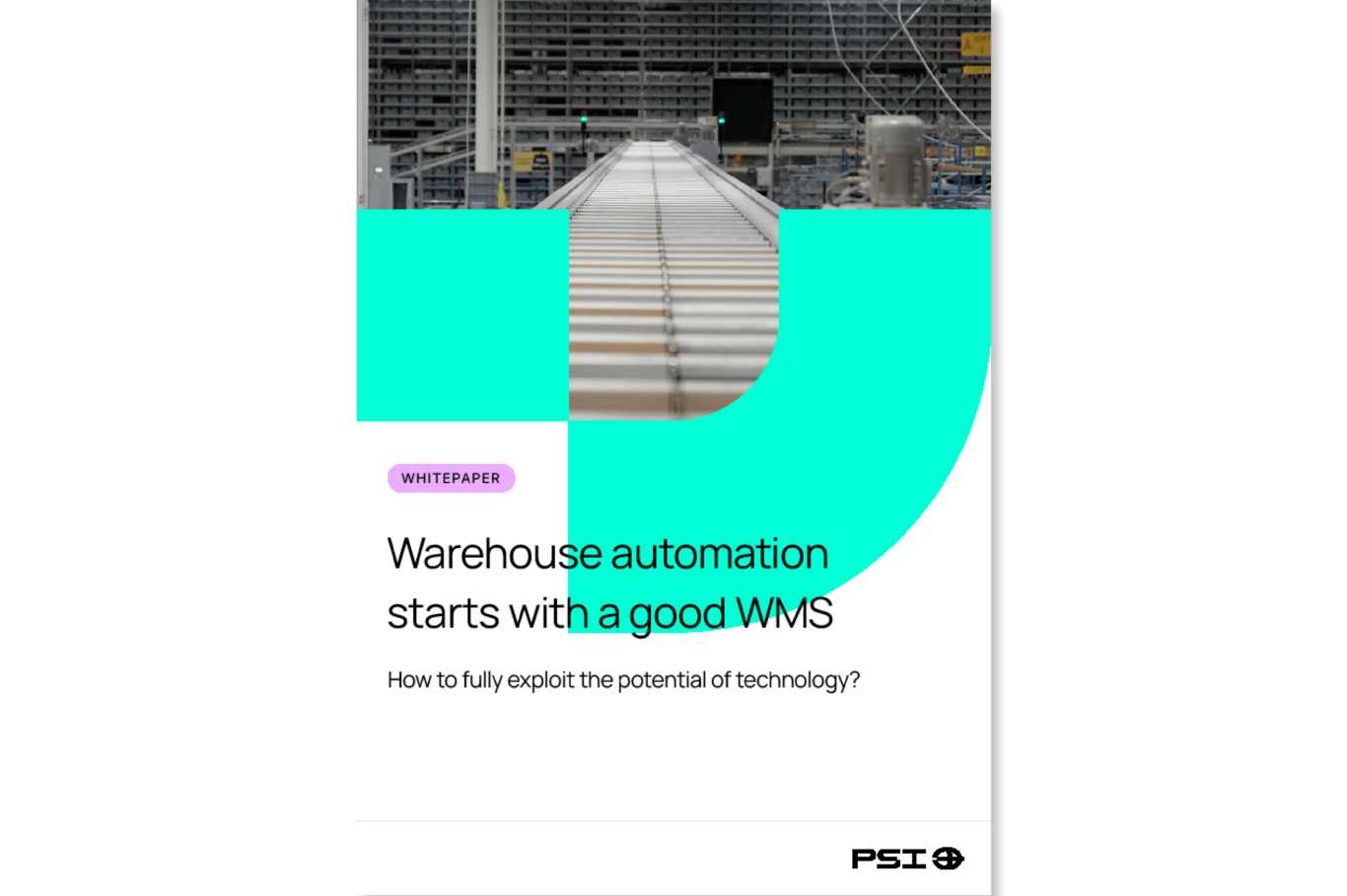
Warehouse automation: efficient and future-proof
Discover how to unlock the full potential of your warehouse automation by connecting technology, software, and processes through an integrated Warehouse Management System. Our white paper explains how to avoid costly automation silos and establish a scalable, future-ready intralogistics operation.
Four core questions before selecting a system
Before choosing a software architecture, the initial discussion should focus on operational needs rather than a binary choice between "WMS or WES." In practice, project success depends on clearly answering several core questions internally:
- What decisions are finalized within the WMS, and which subsystem implements them?
- How is the execution sequence for tasks and assignments determined?
- Which disruptions occur most frequently on the shop floor, and what is the standard recovery procedure?
- How do you ensure that open orders and inventory records do not become desynchronized during system restructuring?
Conclusion: A question of conception
A cube storage integration does not escalate into an overly complex project because of its physical hardware, but rather due to unresolved boundaries between the WMS, WES, and WCS layers. Defining system ownership and the software architecture before drafting the technical specifications sheet prevents the duplicate orders and inventory discrepancies that inflate subsequent operational costs.
For further details, read the "Cube Storage" report published by even Logistics: www.even-logistics.com/de/reports/even-report-6-das-musst-du-uber-cube-storage-wissen.