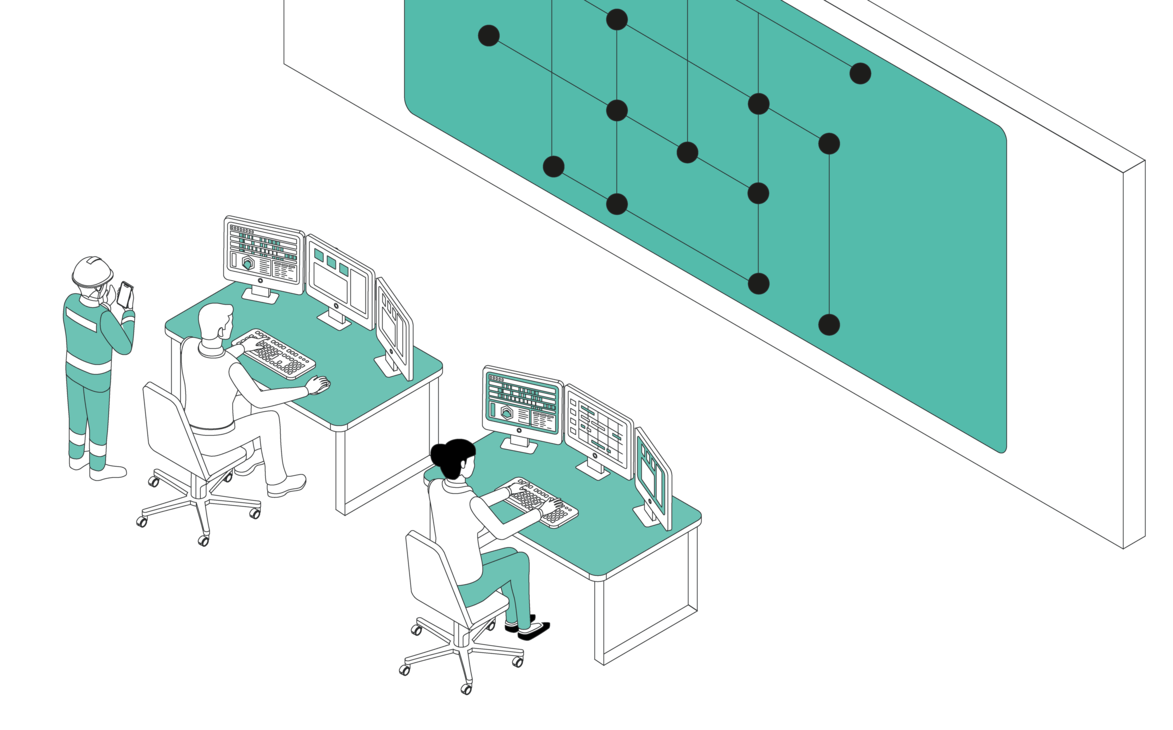
How PSI is building international flexibility into the future of Grid & Energy Management
Evolution over revolution: With the Next Generation Platform (NGP), PSI is advancing its technology for critical network infrastructure with a clear focus on modularity, scalability, and international markets.
The next evolutionary leap – farewell to the monolith
The operational requirements for pipeline- and line-based infrastructure, from electricity and gas to hydrogen, district heating, and potable water, are changing at unprecedented speed. Distributed energy resources, increasingly volatile feed-ins, and stringent regulatory requirements for critical infrastructure (KRITIS) demand new levels of agility and adaptability.
To ensure that grid operators retain maximum flexibility and protect their investments for decades to come, PSI Software SE’s Grid & Energy Management (GEM) Business Unit is entering the next major phase of its technology strategy:
This transition represents far more than a conventional software upgrade. NGP marks a strategic shift from historically evolved, monolithic architectures toward a highly modular, interoperable, and flexibly scalable platform ecosystem.
NGP is not a risky greenfield experiment, but a controlled architectural evolution. We are transferring decades of proven domain expertise step by step into a future-proof, modular platform ecosystem.
The architectural triad – efficiency, scalability, modularity
The technological backbone of NGP rests on three foundational pillars designed to handle exponential data growth and increasing functional complexity:
Platform efficiency
Cloud-native meets uncompromising resilience
The foundation is built on modern technologies such as Kubernetes, Apache Kafka, GitOps, container registries, and integrated Identity and Access Management.
- Parity between cloud and on-premise: the platform can be deployed natively in the cloud (e.g., Google Cloud Platform) or entirely on-premise.
- Air-gap & infrastructure hardening: for security-critical networks, dedicated “on-prem air-gap deployment” mechanisms are available, allowing seamless integration into existing demilitarized zone (DMZ) architectures.
Scalability
Moving from limitation to elastic flexibility
Traditional systems face growing performance demands as millions of additional IoT sensors, smart meters, and decentralized generation assets are connected to the grid.
NGP is designed to move from limited scalability toward flexible, resource-based scalability. Individual horizontal system resources can be expanded, scaled, and maintained independently, allowing computing capacity to adapt to changing requirements.
The goal is straightforward: software infrastructure that can grow with the network without compromising performance or reliability.
Modularity
High-performance microservices replace monoliths
Calculation cores that have been proven over decades - including those embedded in PSIcontrol or PSIsaso - are being decoupled and transformed into autonomous microservices.
This enables individual functional modules to follow their own release cycles and be scaled, maintained, and upgraded independently. It also allows the platform to respond more quickly to regional requirements and regulatory changes, such as Redispatch 2.0 in Germany.
The result is greater flexibility and maintainability without compromising reliability or cybersecurity. Security is embedded into the architecture from the outset, following a security-by-design approach.
Five clusters, one platform – the portfolio at a glance
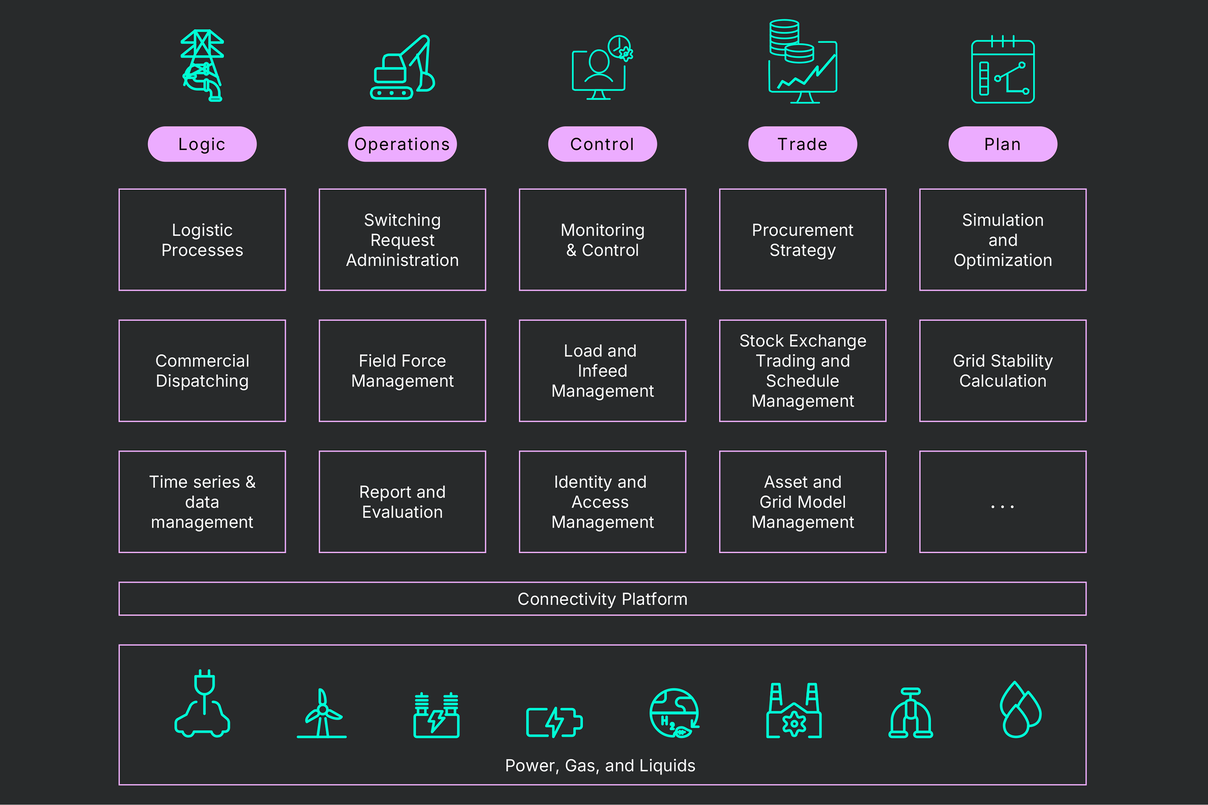
To cover the lifecycle of power and utility management end to end, NGP organizes its functionality into five clearly defined application clusters built around a central Connectivity Platform:
- Logic – cross-functional logistics and data processes, including commercial dispatching.
- Operations – switching order management, fault clearing, and modern field force management for on-site crews.
- Control – real-time monitoring, SCADA control functions, load balancing, and feed-in management.
- Trade – procurement strategies, exchange trading, and automated nomination and schedule management.
- Plan – grid stability calculations, simulations, and dynamic target grid planning.
The underlying Connectivity Platform provides cross-cutting capabilities ranging from identity and access control to time-series handling and standardized asset and grid models.
Design system – user experience reimagined
A powerful architecture delivers its full value only when paired with intuitive usability. With the new NGP Design System, PSI is introducing a standardized UI/UX component library based on web microfrontends:
- Consistent ergonomics
Universal, reusable design elements - including buttons, chips, and contextual action sheets - create a consistent user experience across applications, regardless of the operator’s location or language. - Reduced errors and faster operations
Clear visual hierarchies simplify the onboarding of new control room personnel and help minimize operational errors, particularly during high-pressure grid situations. - Smooth migration through a hybrid approach
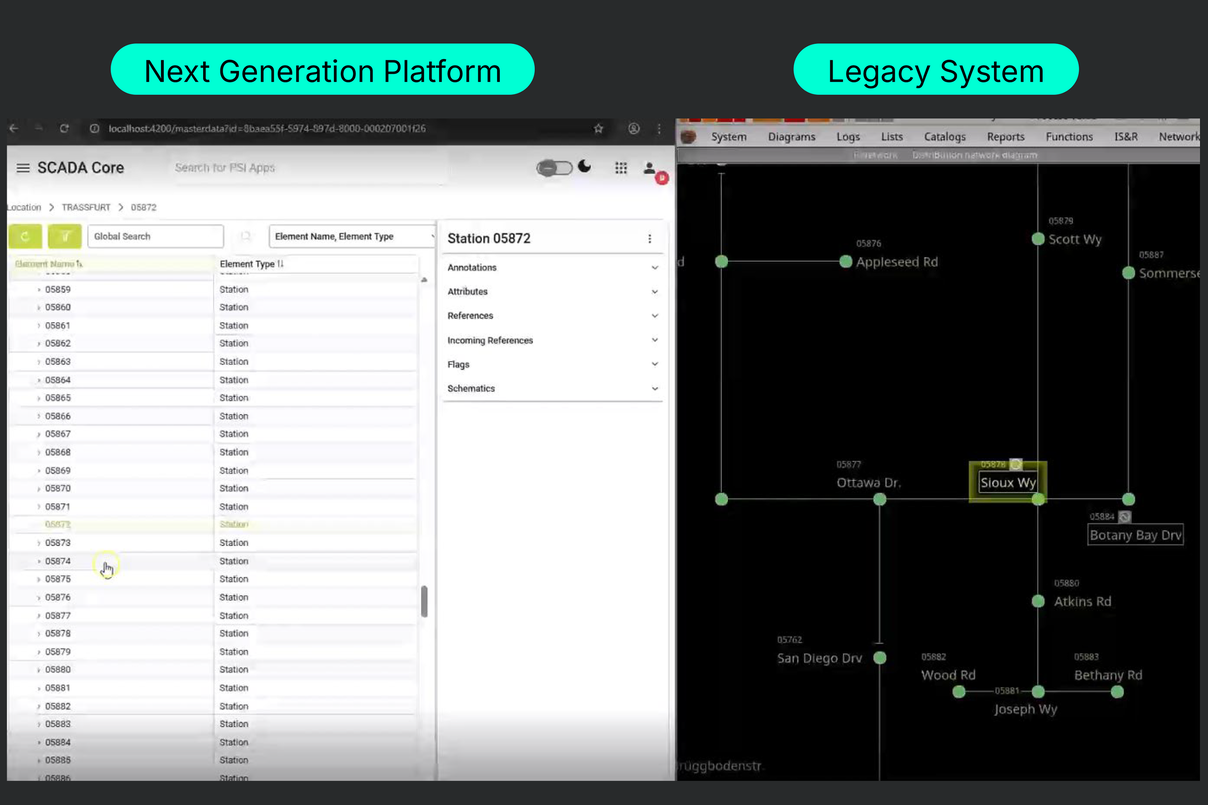
Control room teams do not have to switch to the new environment overnight. Legacy system interfaces and modern NGP views can operate side by side, with cross-system search capabilities and intuitive drag-and-drop data sharing between both environments.
Global by design – seamless localization without friction
With international growth at the heart of PSI’s Grid & Energy Management strategy, internationalization is embedded directly into the architecture of the Next Generation Platform.:
- Instant language switching
Operators can dynamically change the user interface language at runtime without restarting the application or interrupting ongoing tasks. - Regional conventions
The platform supports regional conventions for time zones, date formats, currencies, and localized character sets. - Engineering terminology
Regional technical terminology and industry-specific abbreviations can be incorporated accurately into the control system environment. - Intelligent documentation
Standardized upgrade guides and technical documentation will increasingly be enriched directly within the application through interactive AI-based documentation assistants.
AI in the control room – data analytics using natural language
A major milestone within the Reporting & Analytics module is the separation of operational control data from administrative and office environments.
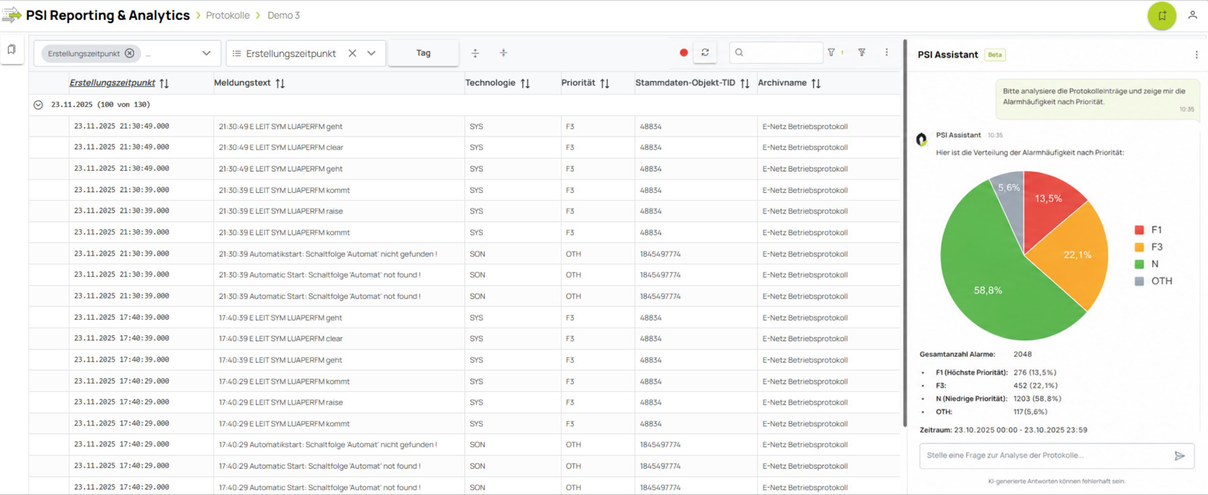
Historical logs, events, alarms, and trend curves can be analyzed and exported without placing additional computational load on real-time SCADA cores.
An integrated AI chatbot will enable users to conduct sophisticated data analyses using natural language. Whether querying alarm distributions by priority, investigating anomalies at grid substations, or evaluating historical time-series trends, users will be able to generate tables and charts through conversational interaction.
Roadmap – pacing confidently into the energy future
The transformation is progressing according to a clearly defined roadmap:
- Fixed 6-month release cadence
Predictable major releases will introduce new core functionality twice a year, complemented by rapid, modular security patches. - Digital twins
The platform will continue to expand its use of high-fidelity digital twins of physical grid assets, enabling predictive simulations and scenario-based forecasting. - AI autopilots
Future milestones include advanced AI co-pilots and assistants designed to support dispatchers during grid disturbances by providing automated, context-aware operational recommendations. - Customer collaboration
Active product management brings together the perspectives of customers and product teams. The first working groups, comprising experts from both sides, have already been established. - Gradual global rollout
With the DACH region serving as a strong technological anchor, the platform is being gradually expanded into international markets.
Conclusion
The Next Generation Platform combines the strengths of two technological eras: the proven robustness, reliability, and deep domain expertise PSI has developed over decades in control systems, together with the agility, modularity, and innovative potential of modern cloud-native and AI technologies.
Ready for the grids of tomorrow? Actively shape the resilient, platform-based future of energy supply!