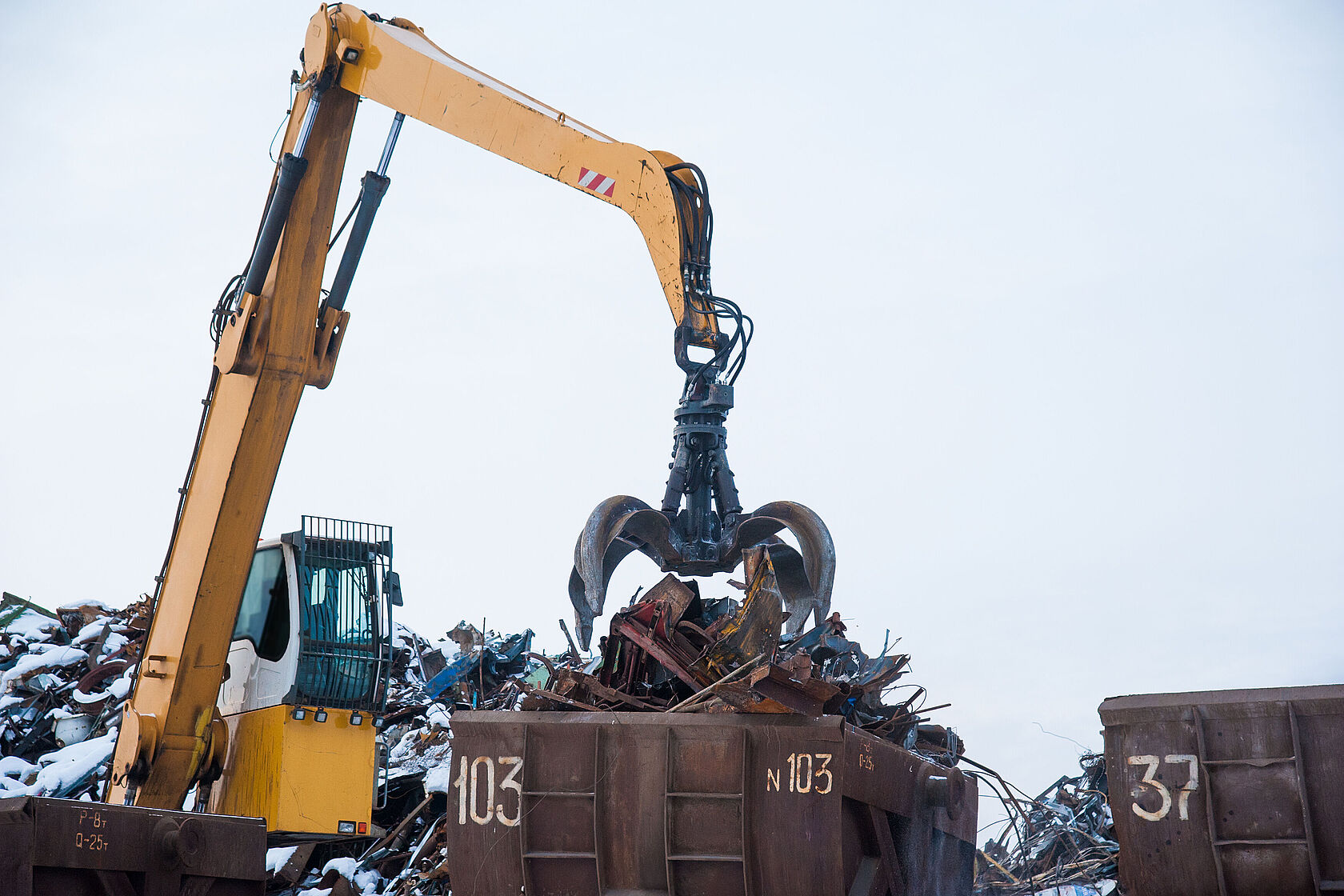
Steel and aluminum producers generate scrap on site during production, for example through trimming operations or by cutting head and tail ends. In 2024 alone, there was over 543 million metric tons of steel scrap. This scrap is a valuable resource that can be recycled in the producer’s melt shop or sold externally. It is therefore collected in scrap containers placed at dedicated locations next to the production lines, typically without any sorting mechanism. As a result, these containers may hold scrap from multiple production campaigns, leading to highly heterogeneous content.
Steel scrap market
in 2024
by 2030
market growth
The key challenges: Efficiency and sustainability
For producers, the key challenge is to accurately determine the composition of the scrap in each container, as this knowledge enables more efficient high-grade recycling. In addition, consistent carbon footprint tracking requires accounting for the carbon footprint associated with recycled production scrap. This is only possible when the producers know exactly the scrap contents for each production batch. If steel and aluminum producers cannot accurately determine the composition of scrap in each container and cannot link recycled scrap to specific production batches for carbon accounting, several consequences arise:
Waste of raw materials and potential
Without precise knowledge of scrap composition (e.g., alloying elements, residuals), the melt shop must operate with conservative assumptions. This often leads to suboptimal charge mixes, increased use of virgin raw materials, and lower yields of high-grade steel or aluminum.
Compromised product quality
Unknown scrap composition can introduce unwanted tramp elements (e.g., copper, tin), which may compromise product quality, require additional refining steps, or even lead to downgrading or rejection of finished steel or aluminum products.
Increased operating and process costs
To mitigate uncertainty, producers may overuse primary materials, ferroalloys, or energy-intensive refining processes, directly increasing material, energy, and operational costs.
Lack of transparency and optimization
Inability to link scrap to specific production campaigns reduces transparency in internal material flows, making process optimization and root-cause analysis of quality deviations more difficult.
Incorrect product carbon footprints reporting
If the recycled scrap content per batch is unknown, the associated embedded carbon cannot be reliably allocated. This leads to inconsistent or potentially incorrect product carbon footprints, affecting environmental reporting and compliance with customer or regulatory requirements.
The solution: Waste material becomes recyclable material
PSImetals Scrap Tracking resolves these challenges as well as the resulting consequences by managing production scrap as batch material and automatically collecting the needed data during production. The system set-up for scrap tracking is simple and can be easily integrated into any steel or aluminum producer’s existing system configuration.
Implementation in 4 stages
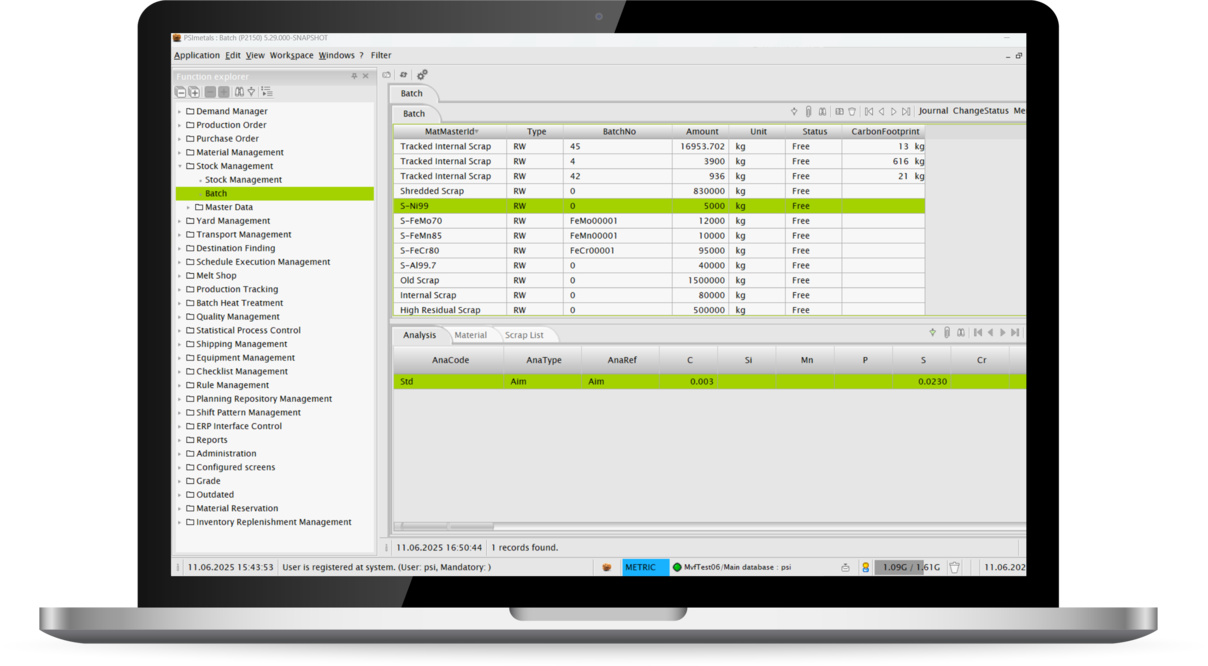
First, scrap collection points are created in a dedicated master data screen. These are the slots where scrap containers are placed next to the lines. Secondly, the relationship of the scrap collection points to the lines are configured. Next, a scrap collection point is dedicated to certain scrap types of a specific line. And finally, the scrap containers are then managed as equipment in PSImetals.
Results derived from using PSImetals Scrap Tracking
Implementing PSImetals Scrap Tracking will ensure that batches are automatically created and recalculated considering mass, mixed chemical composition, carbon footprint and custom scrap category. In addition, the detailed composition (what was cut from which mother material) is logged based on the events. The standard production / scrap events are interpreted, which includes cancelations.
With these in place, as a steel or aluminum producer, your will see the following benefits:
- Your meltshop will be significantly optimized because your will be able to better match scrap to target grades, reduce the need for virgin raw materials.
- You will record higher product quality and consistency since knowing the exact composition of scrap reduces the risk of introducing unwanted residual elements.
- Production cost will drastically reduce due to accurate scrap allocation and use of high-value internal scrap, which minimizes overuse of primary materials, ferroalloys, and refining steps.
Turn scrap into a strategic advantage
Scrap is a material that has very high value for both steel and aluminum producers. It should therefore not become difficult to manage in order to derive its full benefits. This is why PSImetals Scrap Tracking was implemented in the PSImetals 5.28 solution architecture to help customers automate such process and increase productivity, reduce cost and achieve their sustainability targets
Products used
PSImetals
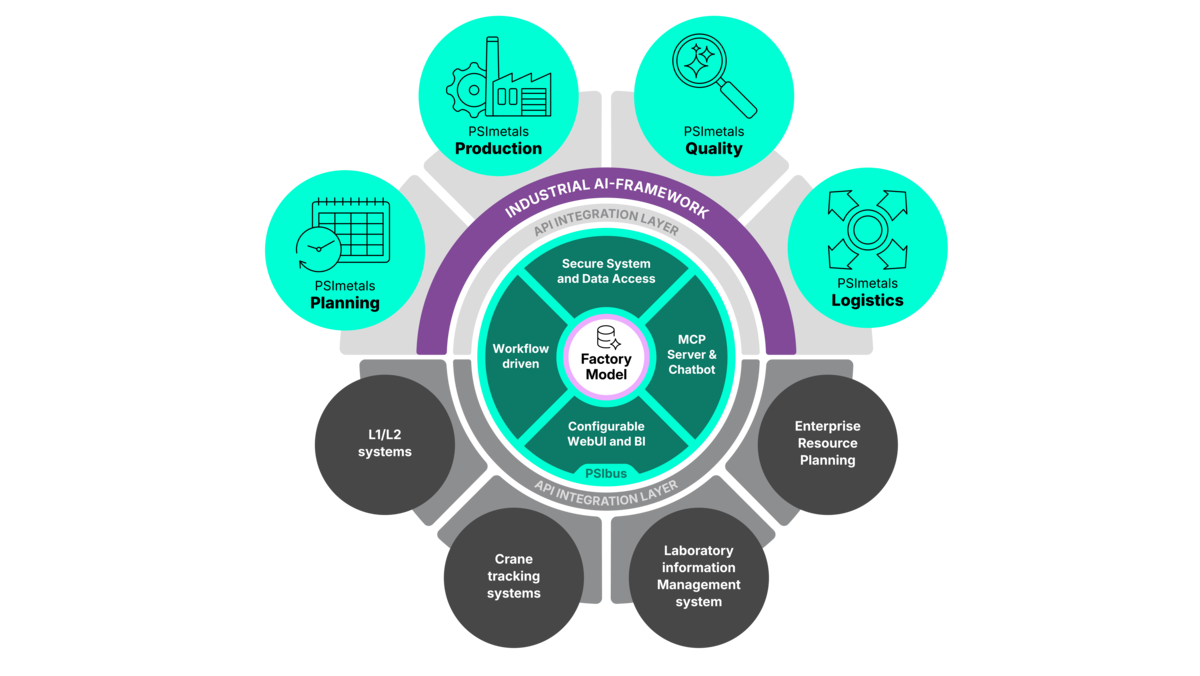
As a manufacturer of steel or non-ferrous products, you ensure your competitive edge by delivering the products to your customers in the agreed quantities and qualities as well as on schedule. PSImetals is the software product based on which we deliver production management solutions for the metals industry and support you in meeting the demands of your customers.
-
Process flow optimization
PSImetals optimizes and balances process flows and resource usage.
-
Efficient KPIs
PSImetals uses efficiency KPIs as optimization targets.
-
Reduced cost
PSImetals enhances cost effectiveness which increasingly implies sustainability.