Volatile supply chains, rising customer expectations, and growing cyber risks are shaping the industrial landscape. In discrete manufacturing, aspects such as product variety, deadline dependencies, and complex production structures are adding to the pressure. ERP and MES will therefore become even more important in 2026 – as a reliable basis and driver of efficient processes.
Four topics in particular are coming into focus: AI-supported planning, process optimization, cybersecurity, and SaaS and cloud models. These areas of activity show how companies are further developing their systems and making them future-proof.
Trend 1: Predictability and adherence to deadlines through AI-supported sequencing
AI is continuing to develop into a productive component of production planning, especially where many criteria must be considered simultaneously – for example, in sequencing.
Modern ERP/MES solutions support planning through sequencing processes with integrated AI, in which the sequence of orders – often on the assembly line – is determined in such a way that a balanced workload is achieved. The systems simulate and evaluate different sequences and, on this basis, make recommendations for a sensible order mix. This gives managers greater transparency regarding capacity utilization and the effects of schedule changes. Companies increase their stability and responsiveness, which is an essential prerequisite for acting quickly and economically in changing order situations. Sequencing will thus become a strategic lever for efficiency, predictability, and on-time delivery in 2026.
Trend 2: Agility and resilience through optimized processes
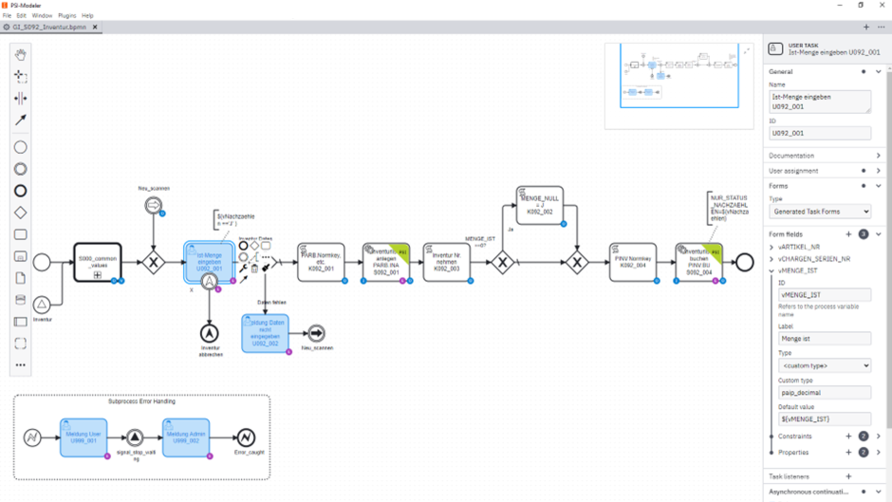
In 2026, companies will still be faced with the task of creating greater transparency in their processes and supply chains. This requires traceable, sustainable, and reliable processes in all areas of value creation. Against this backdrop, the digitalization and optimization of existing ERP and MES processes will become even more relevant than in previous years. This is because it enables companies to respond more quickly and resiliently while significantly reducing bottlenecks, media breaks, and manual routines. In a volatile market environment – especially with fluctuating demand or unstable supply chains – this strengthens the necessary operational reliability. Process digitization thus becomes a key lever for resilience and sustainability.
Trend 3: Increasing ERP and MES security
The economic burden of cyberattacks continues to grow, particularly in logistics and manufacturing. ERP and MES solutions are increasingly coming under scrutiny because they control central business processes and process sensitive data. Securing these systems will therefore become even more important in 2026 in order to prevent failures, manipulation, and production downtime.
The trend is toward security by design and continuous security at the infrastructure, network, and application levels. In this context, companies are increasingly benefiting from the expertise of professional infrastructure providers. These efforts aim to significantly reduce vulnerabilities – for example, through standardized updates, segmented architectures, and defined authorization concepts. A key aspect of success is the permanent integration of security measures into everyday work, rather than treating them as one-off projects. ERP and MES security is thus becoming a central pillar of operational resilience.
Trend 4: SaaS/cloud ERP and MES continue to gain ground
Cloud and SaaS models will continue to gain ground in 2026 as they offer companies greater flexibility and reduce IT burdens. The advantages include scalability, lower initial investment, and cross-location access. SaaS providers deliver new features in small, regular updates, making innovations available more quickly. There is no need for large migration projects, as systems are kept up to date through incremental updates. Cloud environments also facilitate the integration of competitive AI, analytics, and automation components without additional infrastructure costs. During operation, companies benefit from easy scaling and professionally secured infrastructure. At the same time, costs become more transparent and predictable, partly due to pay-per-use models. SaaS is thus establishing itself as a strategic operating model for modern ERP and MES landscapes.
Would you like to gain a deeper insight into PSIpenta/ERP 10?
In our recorded webinar, you can learn more about the features and individual migration options for your company – explained directly by our product experts.
Looking ahead
The ERP and MES trends for 2026 reflect the growing challenges in terms of stability, flexibility, and security, and provide clear answers to these challenges. AI-supported planning, optimized processes, robust security concepts, and cloud and SaaS models address these requirements and support a reliable, future-oriented system landscape.