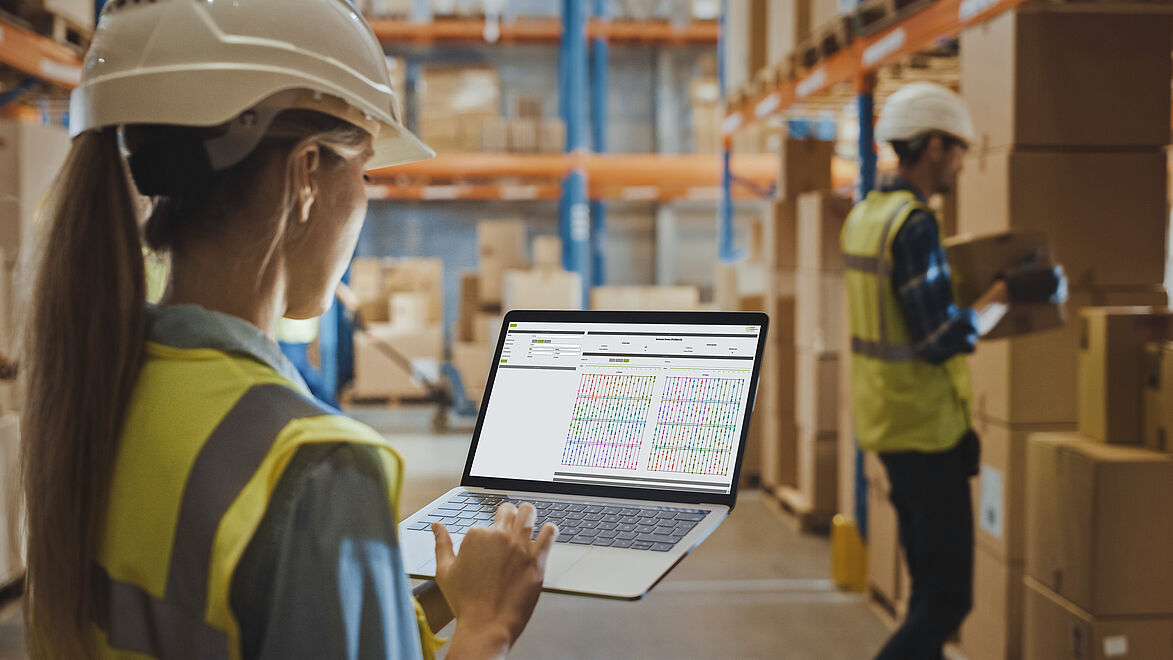
Artificial intelligence is becoming increasingly important for intralogistics. Studies show that the pressure to improve efficiency is growing and that interest in AI solutions is increasing. Initial practical examples prove that AI makes processes more transparent and supports operational decisions-making. Companies that are already using AI productively for warehouse optimization are achieving measurable benefits. Technology providers are therefore increasingly expected to further develop integrated AI solutions and successfully implement them in real logistics scenarios.
A Civey study commissioned by PSI shows how great the demand actually is, with more than half of B2B companies plan to invest in AI solutions for warehouse logistics by 2028. The decision-makers surveyed cite a variety of reasons for this: AI can reduce time and costs, make processes more efficient, and provide more accurate support for demand and inventory forecasting. Above all, companies expect improvements in warehouse optimization, inventory management, storage, goods receipt and dispatch, and the returns process. Thanks to its ability to recognize patterns and continuously optimize processes, AI is becoming a key tool for more efficient intralogistics.
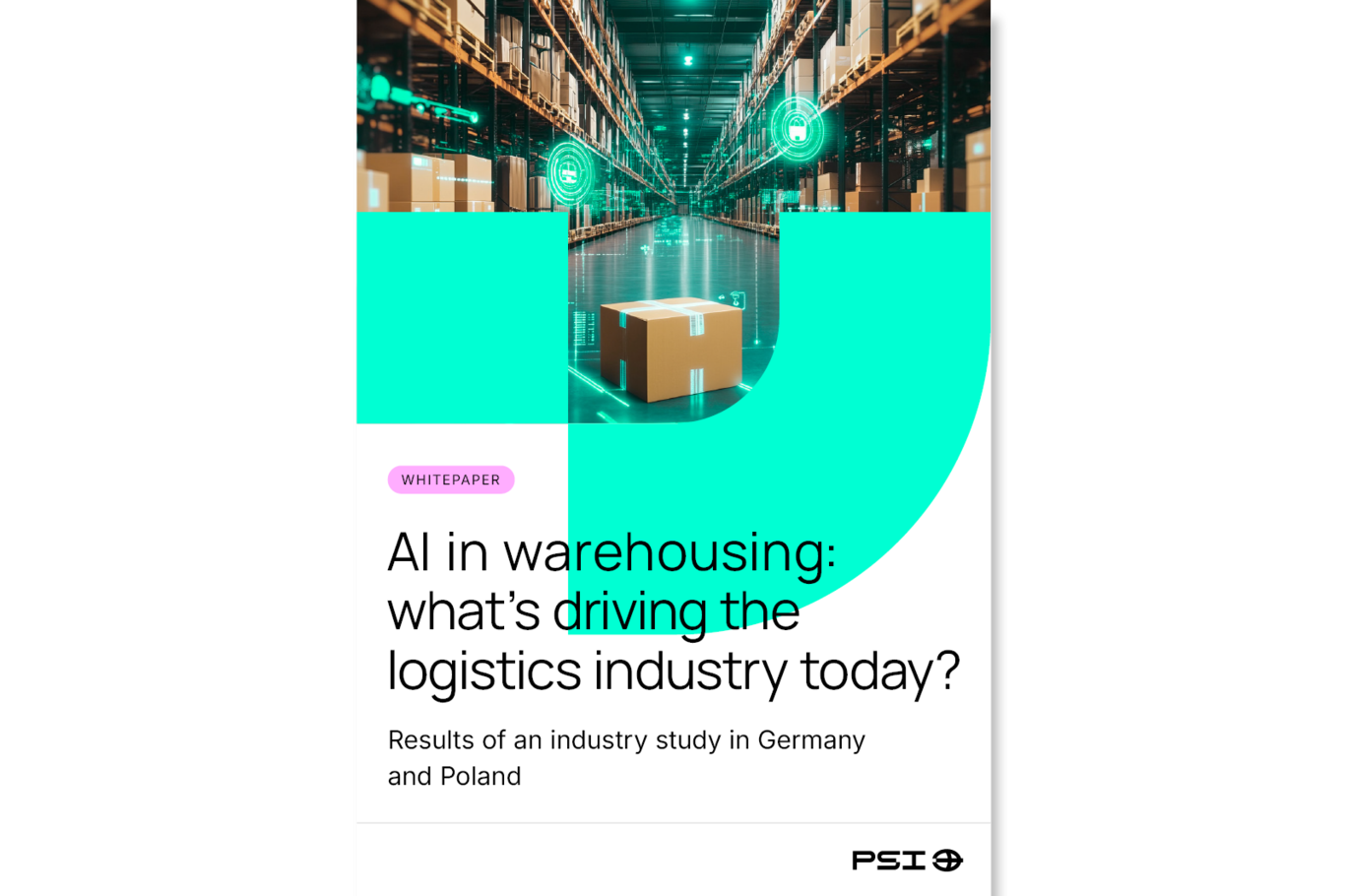
Report on the study AI in logistics
Explore the report to learn how artificial intelligence is being applied in warehouse logistics and the key areas where this emerging technology is making an impact. The study also reveals when intralogistics decision-makers plan to invest in AI and the challenges companies face during implementation.
Award-winning solution for warehouses
PSI has been developing AI-based functions for warehouse management for years and bundles them in the PSIwms AI platform, which is directly connected to PSIwms. The solution is based on a digital twin that maps all the characteristics of the real warehouse and enables a wide variety of scenarios to be tested flexibly and without interfering with actual operations. The digital twin takes all changes in the physical warehouse into account in real time, so that optimization potential can be identified quickly and reliably. For this reason, PSIwms AI was awarded the Best Product Award in the "Software, Communication, IT" category at LogiMAT 2025. The jury praised the solution's contribution to increasing productivity and the holistic optimization of warehouse processes.
You can find out more in the blog article Warehouse optimization with artificial intelligence.
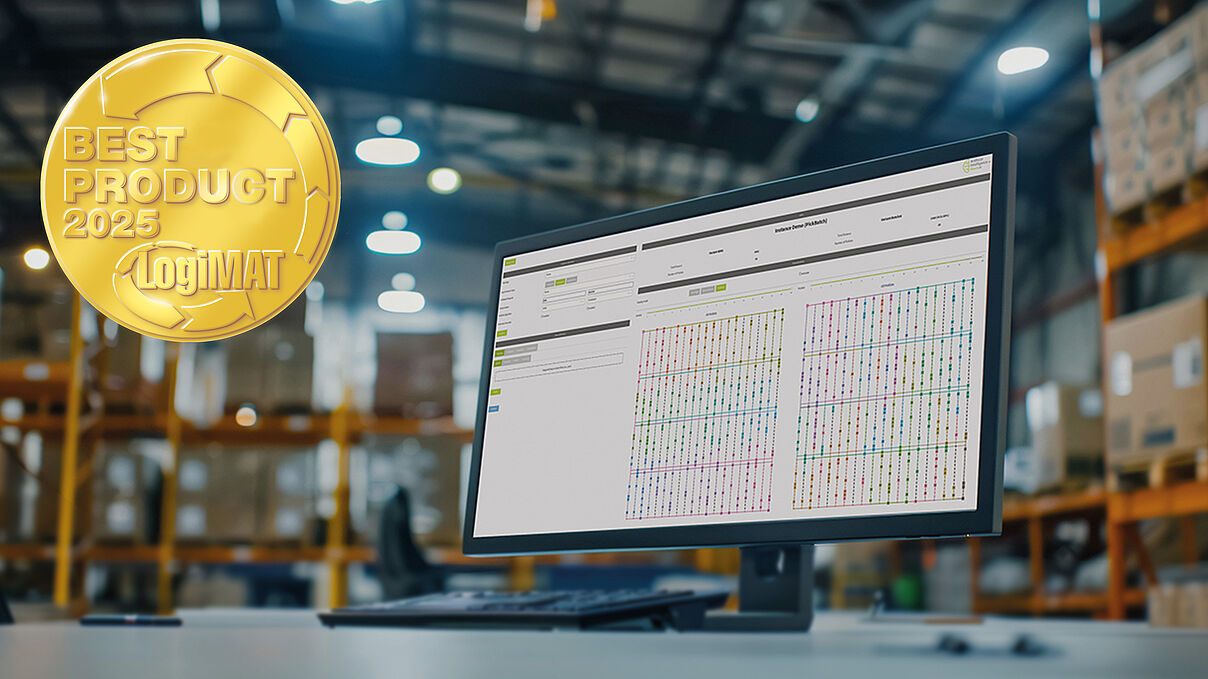
Batch AI makes AI the WMS standard
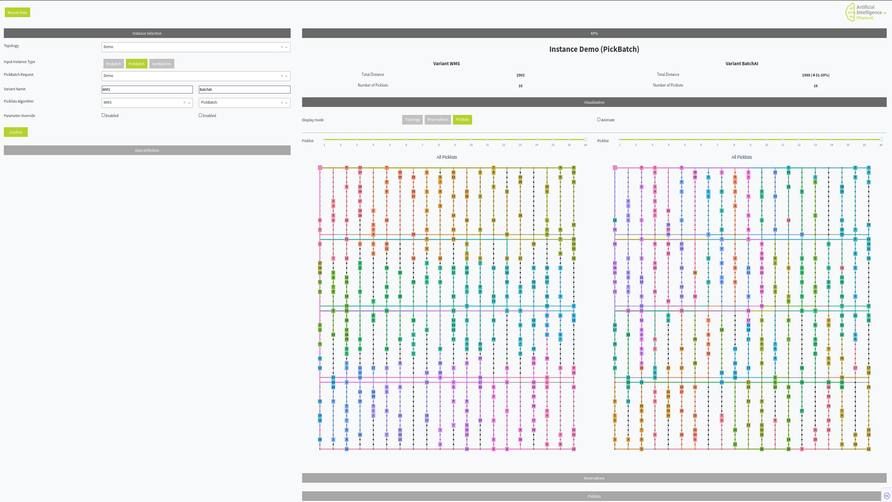
The integrated Batch AI module played a key role in winning the award. Batch AI supports the rule- and AI-based formation of optimal batches for single- and two-stage picking strategies. This reduces walking distances, makes better use of resources, and measurably increases picking performance. This solution has been significantly enhanced and has now been incorporated into the PSIwms standard. For example, Batch AI is a component of the new, significantly optimized PSIwms GO Retail - a purely cloud-based, no-code edition of PSIwms specifically for retail and e-commerce companies. This provides warehouse operators with intelligent, AI-supported batch optimization as standard.
New AI features
In addition to Batch AI, PSI has developed the following three innovative components that will soon enable further optimizations in the warehouse:
- Business Assistant: This intelligent tool answers user questions about inventories, orders, or processes based on current transaction data, significantly accelerating decision-making.
- AI-powered documentation: The right instructions at the right time – directly in the application. It displays context-related tips, step-by-step explanations, and examples right where you are working, reducing searches, queries, and operational errors.
- Configuration Assistant: Guides users step by step through the process selection and automatically models the setup – enabiling a faster go-live, less effort, and fewer misconfigurations.
AI in use at LPP
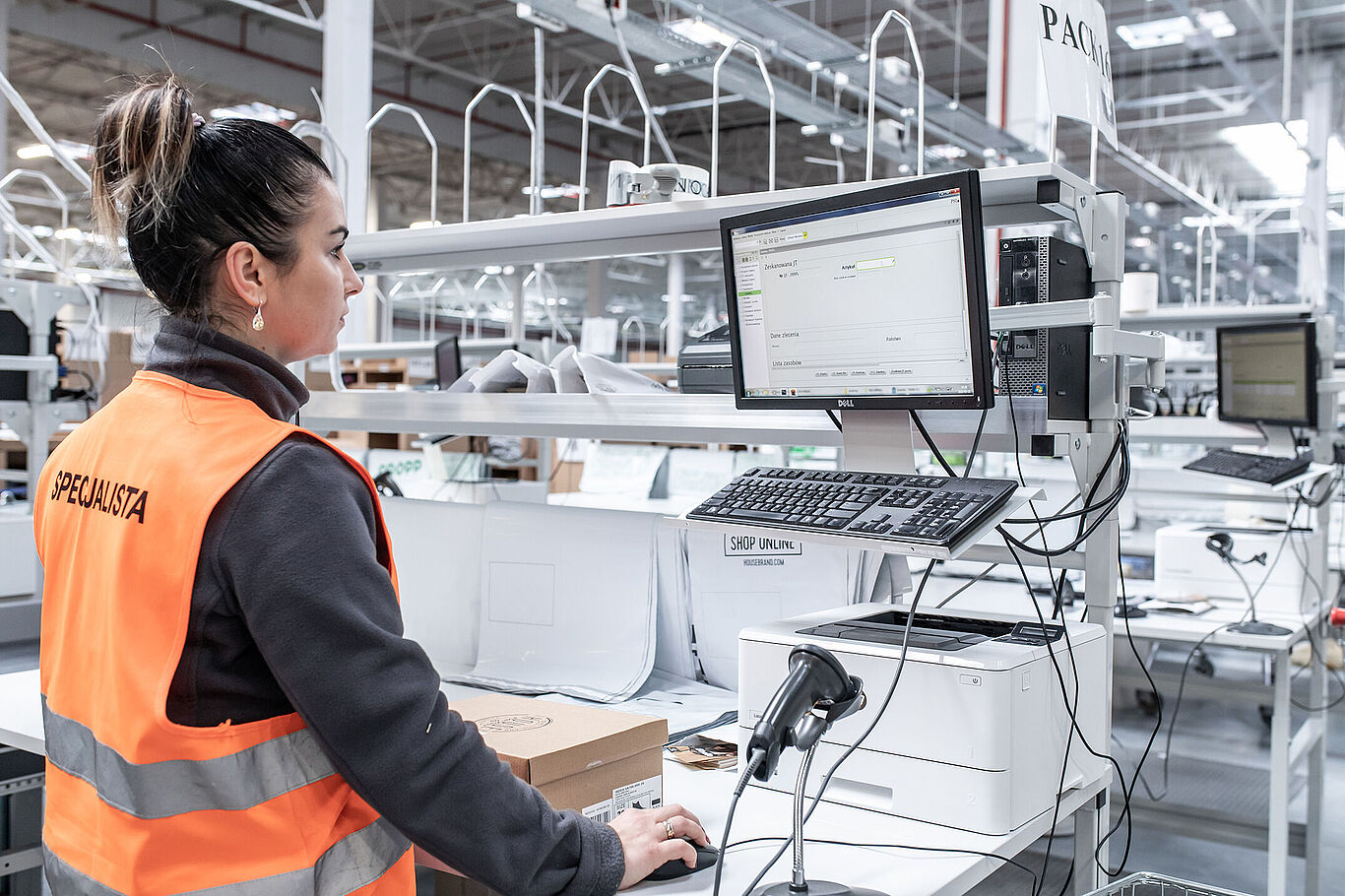
Clothing manufacturer LPP demonstrates how AI makes logistics more efficient: to cope with its rapidly growing online business, LPP uses the PSIwms warehouse management system, which has been in use since 2008, along with the PSIwms AI platform. This has reduced picking distances by around 30 percent and increased picking efficiency by more than 20 percent. The solution is now deployed across all six fulfillment centers and enables growth without a significant increase in personnel.
For more information, see the case study Efficient warehouse logistics with PSIwms AI.
Conclusion: AI has arrived in logistics practice
Current developments underscore how effectively artificial intelligence is transforming intralogistics. The technology simplifies complex processes, boosts efficiency, and supports users in their day-to-day operations. For example, AI optimizes order picking, accelerates decision-making, and facilitates process configuration. In this way, AI acts as a driver for flexible, user-friendly, and future-proof warehouse operations.