Case Study Achieving Cost Leadership with Smart Factory
How Perusch Paletten uses PSIpenta/ERP + MES to scale its product variety cost-effectively.
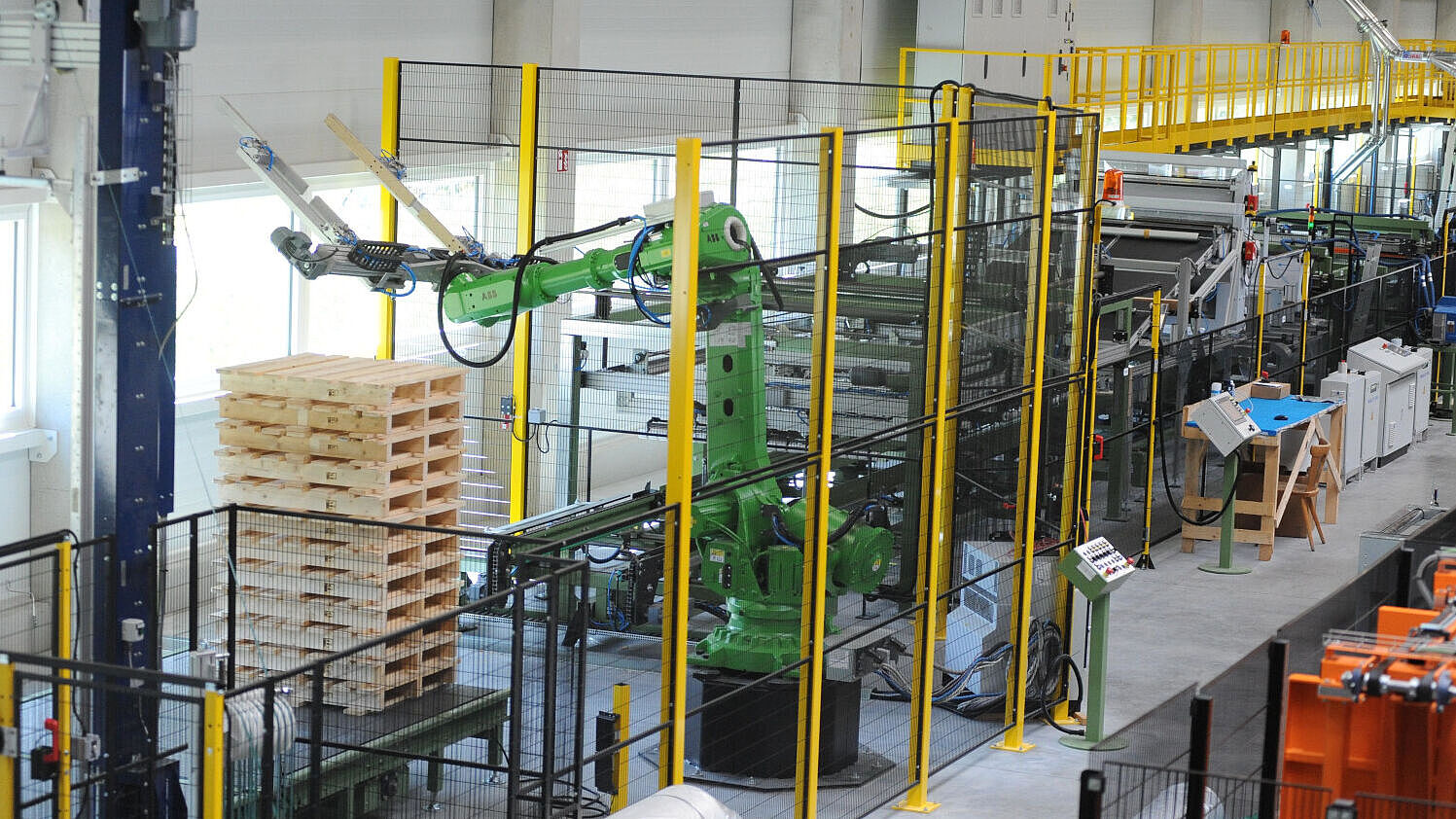
With its “Perusch-Paletten 4.0” smart factory project, Perusch Paletten has created a vertically integrated production architecture in which PSIpenta/ERP + MES, the web portal, and manufacturing work together seamlessly. This has resulted in a manufacturing architecture that enables the company to handle a wide variety of product variants, short lead times, and just-in-sequence deliveries in a stable, cost-effective, and scalable manner.
What appears at first glance to be a relatively simple product is highly complex to manufacture. Different load capacities, deck board configurations, stacking properties, and pallet width-length combinations precise to the millimeter mean that every order at Perusch involves a multitude of individual parameters. At the same time, amid growing price and competitive pressure, customers expect on-time and sequence-compliant deliveries.
With the “Perusch Pallets 4.0” project, the Austrian family-owned company has therefore not only invested in new production capacities but has also systematically digitized and automated its processes. The result is an integrated system architecture that closely interlinks order entry, planning, and production. The result: fewer manual interventions, greater transparency, and a manufacturing process that can be scaled economically even with high product variant complexity.
About Perusch Paletten GmbH
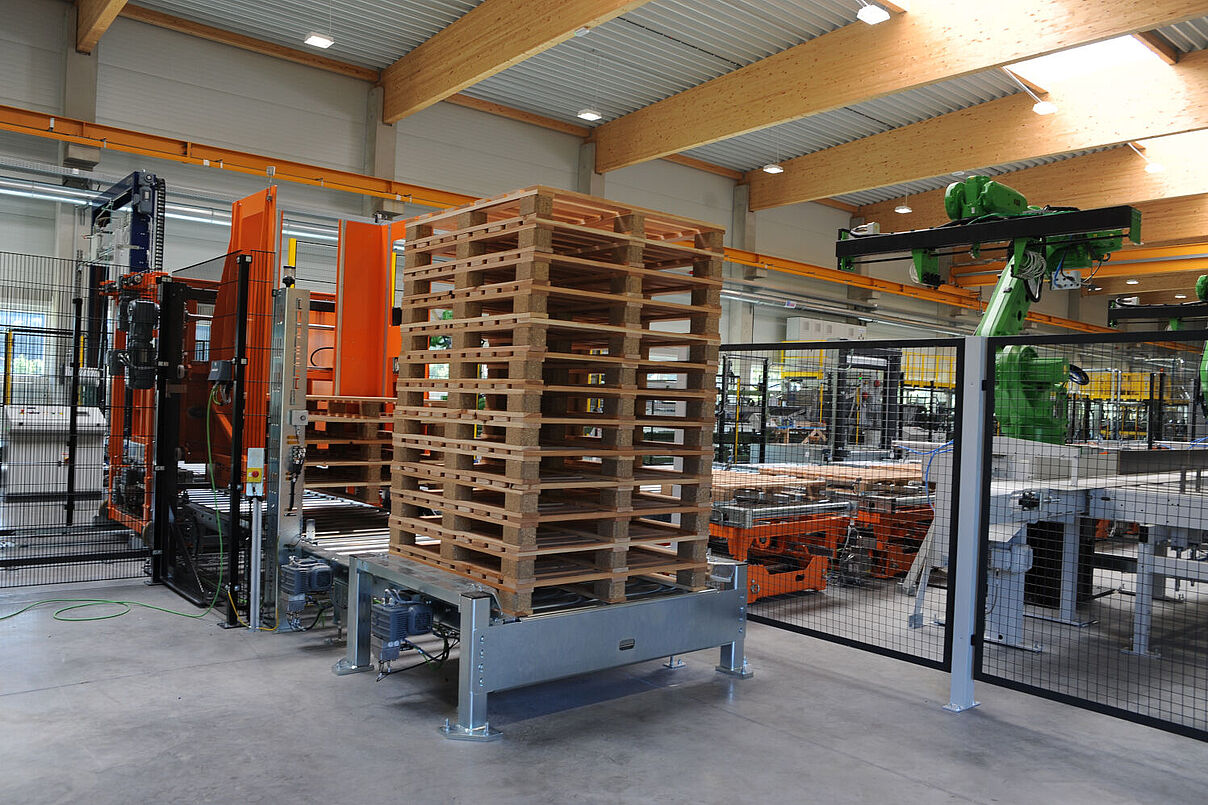
Perusch Paletten GmbH is an Austrian family-owned business based in Frohnleiten, north of Graz. Since 1953, the company has been manufacturing custom-sized pallets in various designs and is now in its third generation of leadership. Its customers primarily include paper and cardboard manufacturers, as well as other industrial companies with demanding logistics and packaging requirements. What began as a small, artisanal operation has evolved into a modern manufacturing company characterized by a high degree of automation and extensive expertise in producing a wide range of products.
Challenges
Perusch Paletten operates in a challenging environment characterized by a wide variety of product variants, short lead times, just-in-sequence deliveries, and increasing price pressure. Even with standardized pallet types, differing technical requirements and dimensions result in countless variations. Every order must be precisely planned, produced with material efficiency, and delivered on time.
The manufacturer also has a clear growth target: to significantly increase production from approximately 900,000 pallets per year with 38 employees, without allowing product variety to become a cost factor and without having to hire a large number of additional staff. The company was therefore looking for a solution that combines automation, digital integration, and cost-effective scalability.
Production characteristics
- Manufacturing of custom pallets for industrial applications
- Wide variety of standardized and custom pallet types
- Just-in-sequence deliveries for paper and cardboard manufacturers as well as other industrial clients
- Seamlessly integrated processes from order receipt, cutting, assembly, and delivery
- High standards for material efficiency and stable production processes
Objectives from Perusch Paletten
With the "Perusch Pallets 4.0" smart factory project, Perusch has leveraged the largest expansion investment in the company’s history to systematically align its manufacturing operations with growth, cost-effectiveness, and product variety. This has resulted in an integrated manufacturing architecture in which automation, digital process integration, and ERP/MES-supported control systems work in tandem. This laid the foundation for economically producing higher volumes and positioning Perusch as the future cost leader in the field of cardboard and paper packaging pallets.
The main objectives
- Produce higher volumes cost-effectively
- Handle a wide variety of product variants reliably and scalably
- Digitize and automate internal processes end-to-end
- Consolidate planning, manufacturing, and order processing into a single integrated IT architecture
- Achieve cost leadership in the cardboard and paper packaging pallet sector
Solution
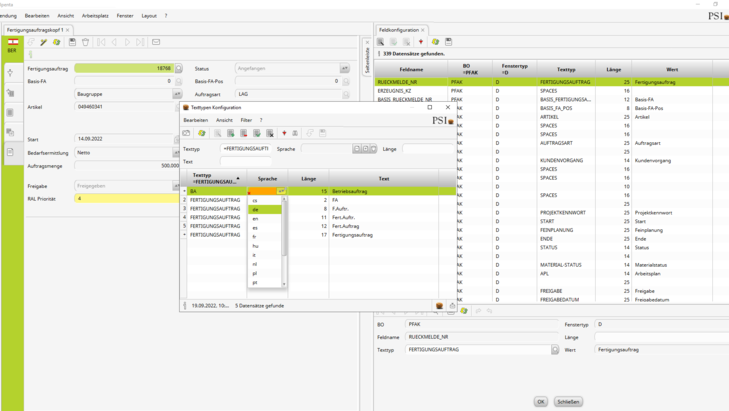
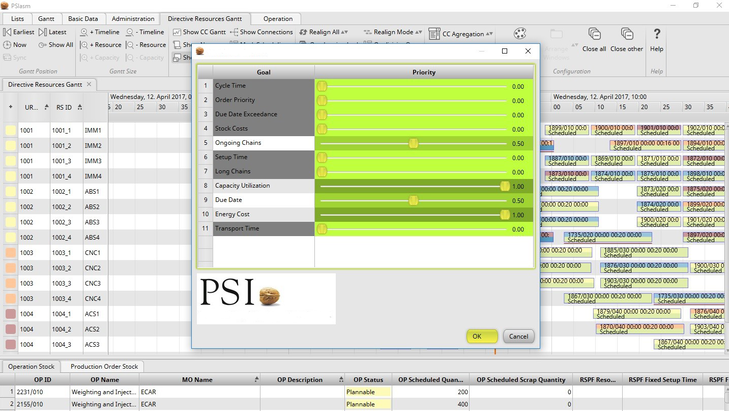
At the heart of the implementation is a vertically integrated system architecture based on PSIpenta/ERP and PSIpenta/MES. This architecture connects the customer web portal with the ERP level, the MES (including the control center), and automated manufacturing. End-to-end integration begins as soon as an order is received: While customers enter their requirements digitally, the ERP system automatically generates processes, bills of materials, and work plans from this data. For each order, an average of 270 customer-specific parameters are fed directly into production. Even configurations that have not yet been manufactured in this form can thus be processed automatically.
Automatic updates from individual stations ensure the necessary transparency during ongoing operations. This makes it possible to track the status of every order at all times, adjust schedules flexibly, and handle recurring processes largely automatically. To support this, the user interfaces have been designed to specifically simplify employees’ daily work and focus their attention on what matters most.
Result
More output, more transparency, more scalability—Through the integrated interaction of ERP, MES, the web portal, and the shop floor, Perusch has created a seamless system architecture in which order intake, planning, and production are closely interlinked. This enables even complex requirements with a high degree of product variety to be implemented reliably, transparently, and cost-effectively. At the same time, manual effort has been reduced, processes accelerated, and material usage further optimized.
The results are already evident in day-to-day production: With a workforce of around 40 employees, Perusch now manufactures 1.15 million pallets per year. The smart factory architecture thus lays the groundwork for sustainably combining growth, stability, and cost-effectiveness, while enabling the economical and scalable production of a wide variety of products.
Conclusion
The Perusch example demonstrates how a high degree of product variety, short lead times, and pressure to scale economically can be successfully integrated using a unified ERP-MES architecture. PSIpenta/ERP and MES provide the foundation for translating complex customer requirements into production in a reliable, transparent, and cost-effective manner. This has resulted in a smart factory that enables growth and brings Perusch closer to its goal of becoming the cost leader in the field of cardboard and paper packaging pallets.