![[Translate to English:]](/fileadmin/_processed_/e/a/csm_AdobeStock_2186586520-edit-by-PSI_55b7600f65.jpg "[Translate to English:]")
How is the use of artificial intelligence in intralogistics evolving? What are the most important areas of application? What challenges arise during implementation in warehouse operations? To shed light on these questions, PSI, together with the market research institute Civey, surveyed 300 logistics specialists and managers in July 2025. One year later, a valuable comparison with operational reality is available.
At the time of the survey, 15 percent of companies were already using AI productively in their warehouses. Another 41 percent announced their intention to invest in corresponding solutions by 2028. The focus is on warehouse optimization and inventory management as the most important areas of application. At the same time, several obstacles such as cost risks, employee acceptance, and technical challenges were identified.
You can read more about the sample and methodology of the PSI study in the press release PSI Industry Study Shows Trend Toward Artificial Intelligence in Warehouse Logistics.
The study at a glance
This is what the logistics pros are saying: the most important results of the representative survey at a glance.
The most important area of application for AI.
The biggest hurdle for AI implementation.
The greatest advantage of using AI in the warehouse.
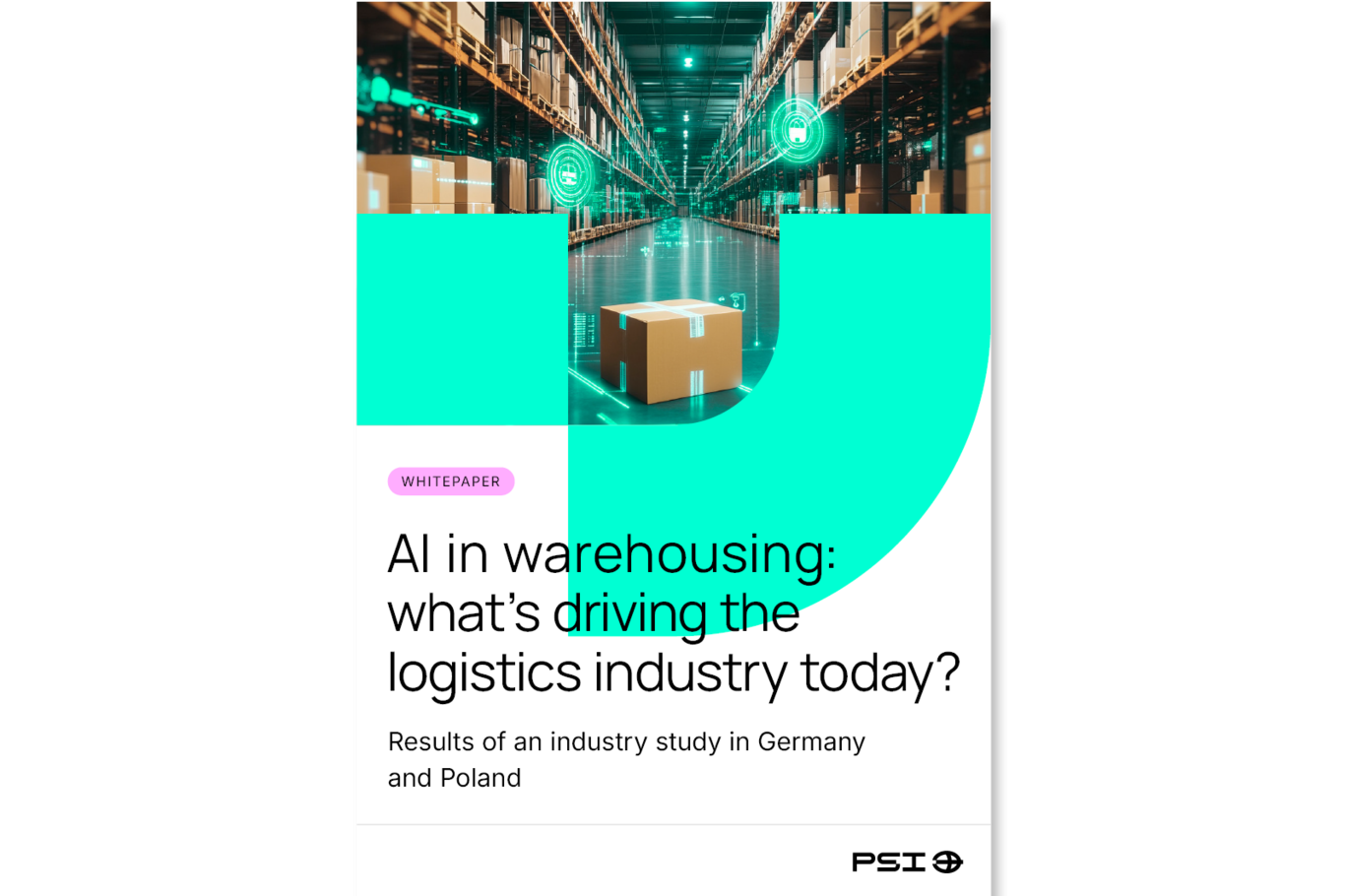
Report on the study: AI in logistics
Explore the report to learn how artificial intelligence is being applied in warehouse logistics and the key areas where this emerging technology is making an impact. The study also reveals when intralogistics decision-makers plan to invest in AI and the challenges companies face during implementation.
One year later: more theoretical than productive
In the summer of 2026, it is clear that the strong interest in AI has remained. What is still missing is the pace of implementation. A noticeable gap remains between the intention to invest and productive use. The use of AI in logistics mostly takes place outside of the actual warehouse processes – for example, for evaluating information or analyzing documents. Many companies have significant reservations about integrating AI into business-critical processes. And these concerns are understandable. AI cannot be a black box with a vague purpose. It must operate within clear boundaries and deliver comprehensible results.
Making the leap into daily warehouse operations
Solutions that make it into productive logistics operations usually provide support in individual, clearly defined application areas: in picking, inventory analysis, or recurring decisions. What becomes productive is what meets three conditions: it fits seamlessly into existing processes, it delivers a quickly measurable benefit, and it remains understandable to the user.
When an idea becomes standard software
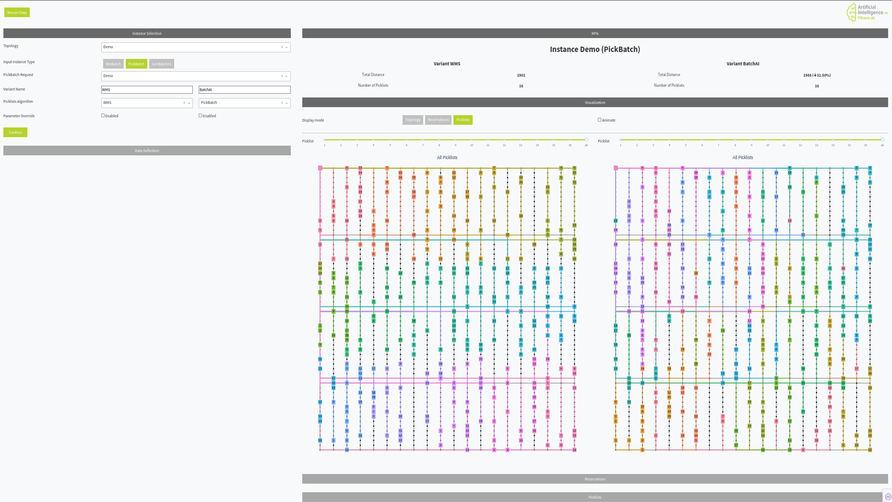
The maturity of an AI solution only becomes apparent when an innovation project turns into a ready-to-use product: calculable in cost, immediately available, and with a directly tangible benefit for the user. PSI is developing its AI portfolio in precisely this direction. A first result of this strategy is Batch AI: The AI module is now part of the PSIwms standard. In practical use, it has helped customers reduce picking routes by around 30 percent and increase picking efficiency by over 20 percent. This is just the beginning: Following the model of Batch AI, PSI will develop further AI modules that offer concrete advantages in very practical application areas.
You can learn more about PSI's AI strategy in the blog article New AI modules for improved warehouse processes.
Conclusion: step by step instead of a big leap
The interim assessment after one year is relatively calm – and that is good news. AI will only become standard in the warehouse through comprehensible, clearly defined solutions with measurable benefits. Those who see AI as a toolbox rather than a complete package will achieve productive use more quickly. PSI is continuously developing its portfolio in exactly this direction.


![[Translate to English:]](/fileadmin/_processed_/7/3/csm_Technologietrends-Logistik_465500986_c34b3b91ea.jpeg "[Translate to English:]")